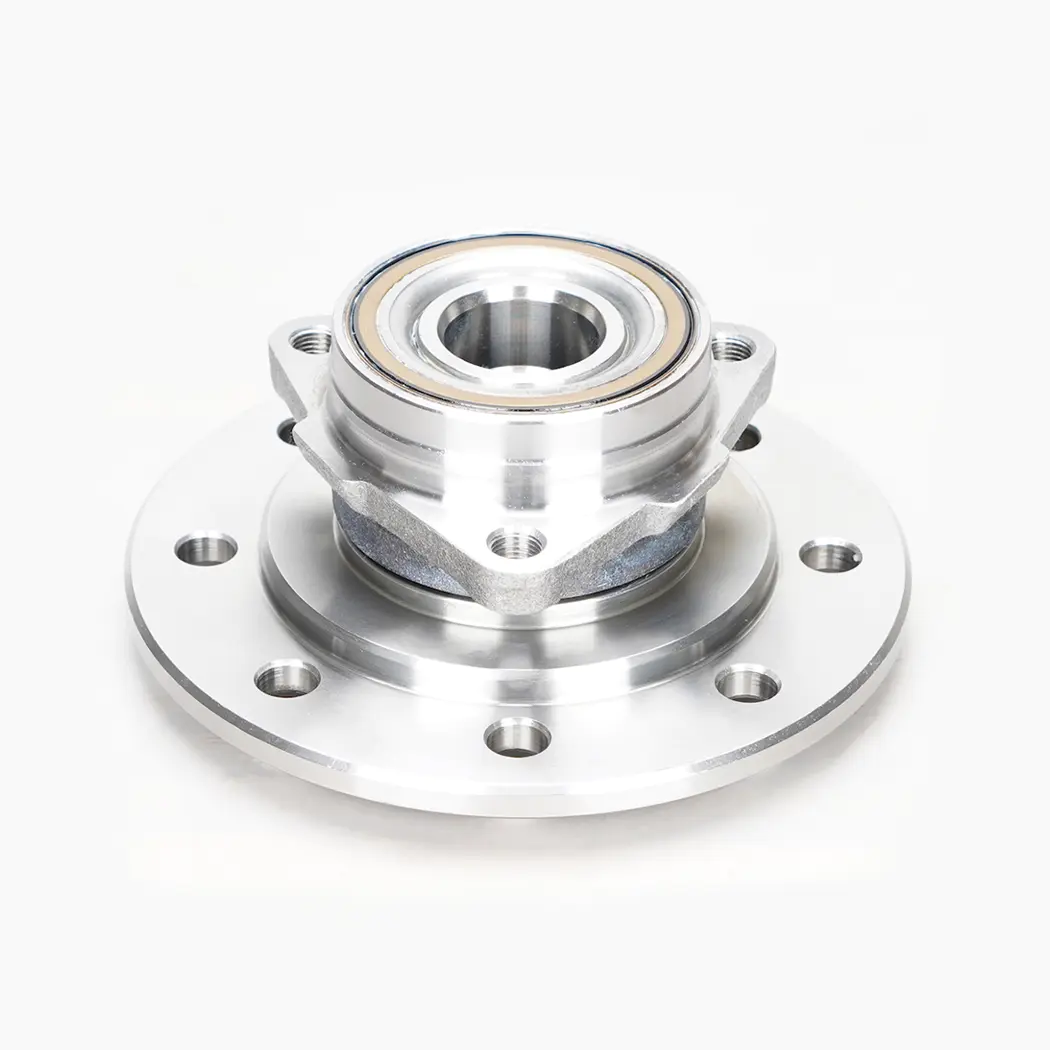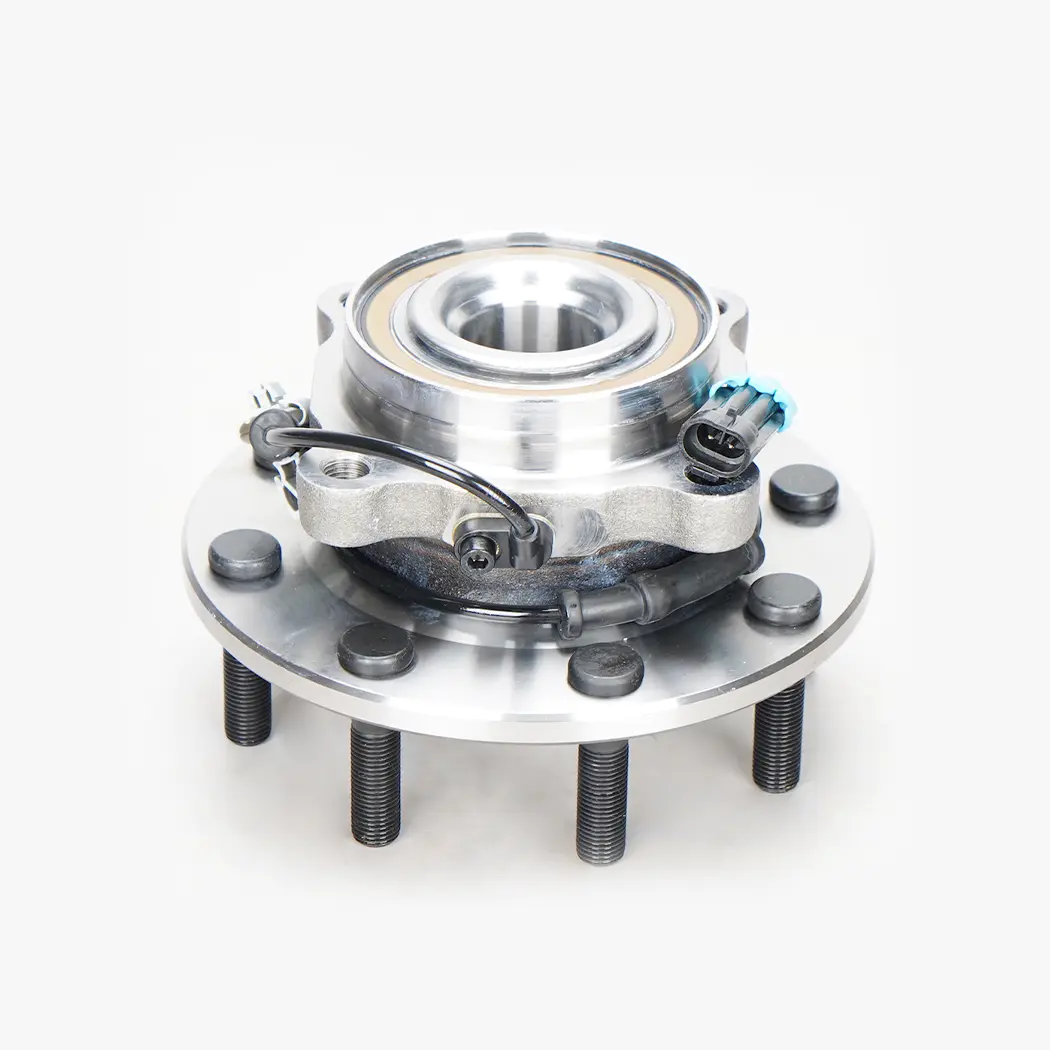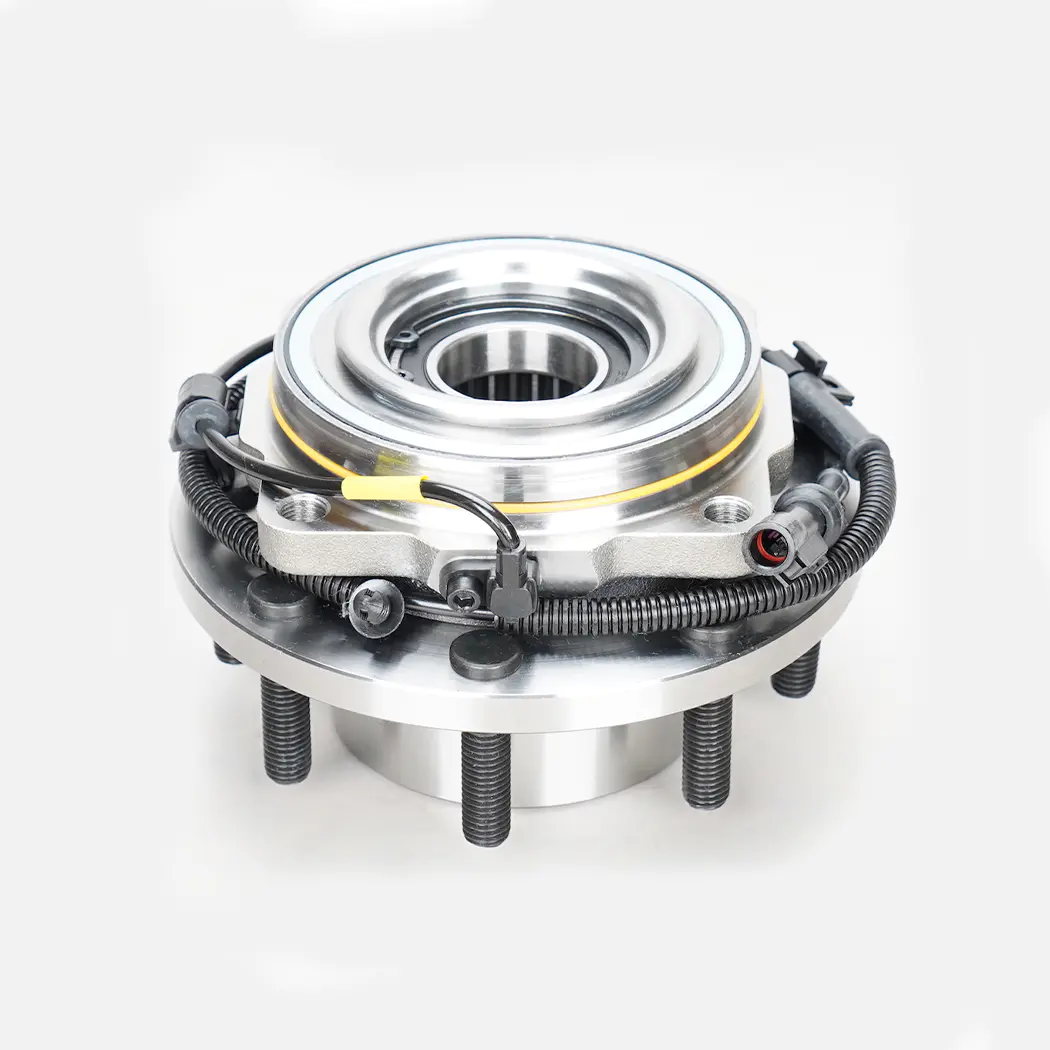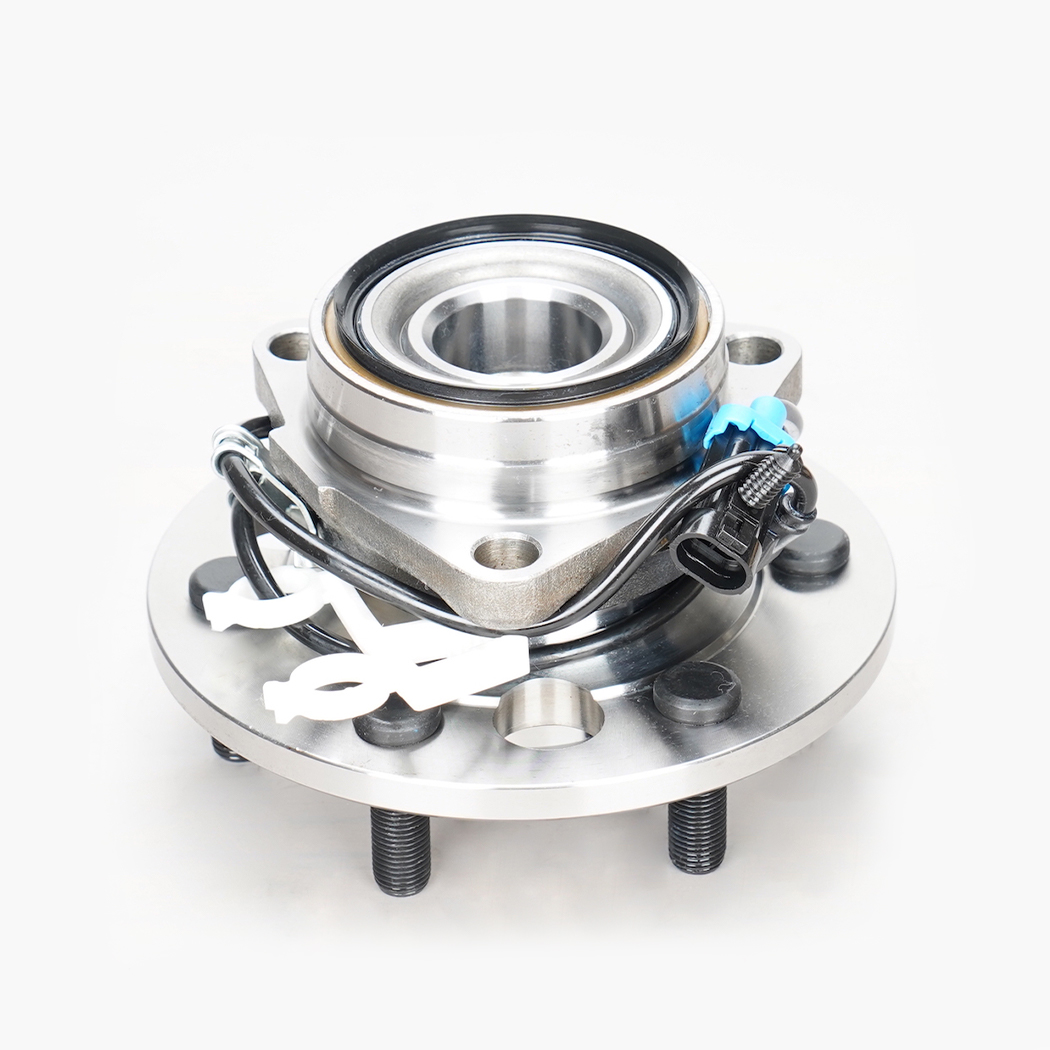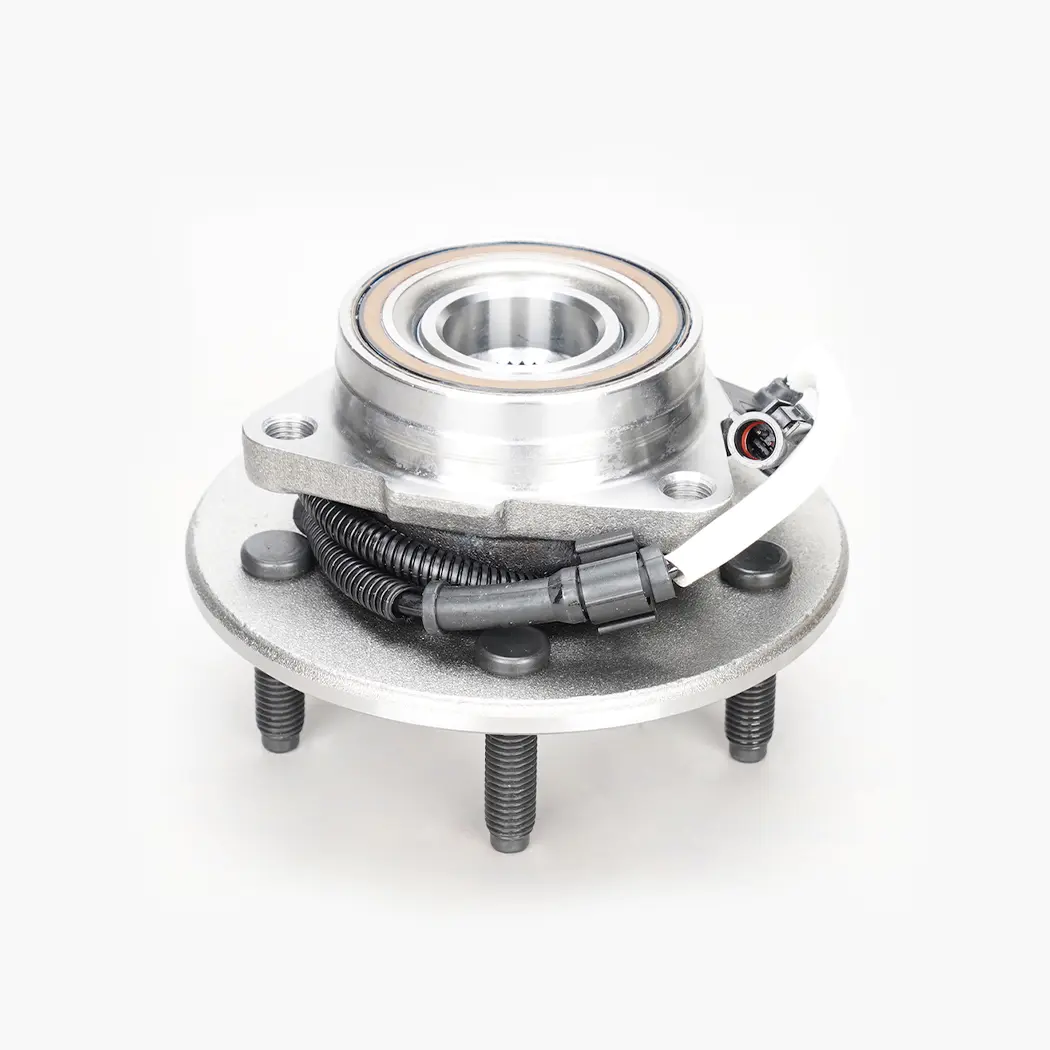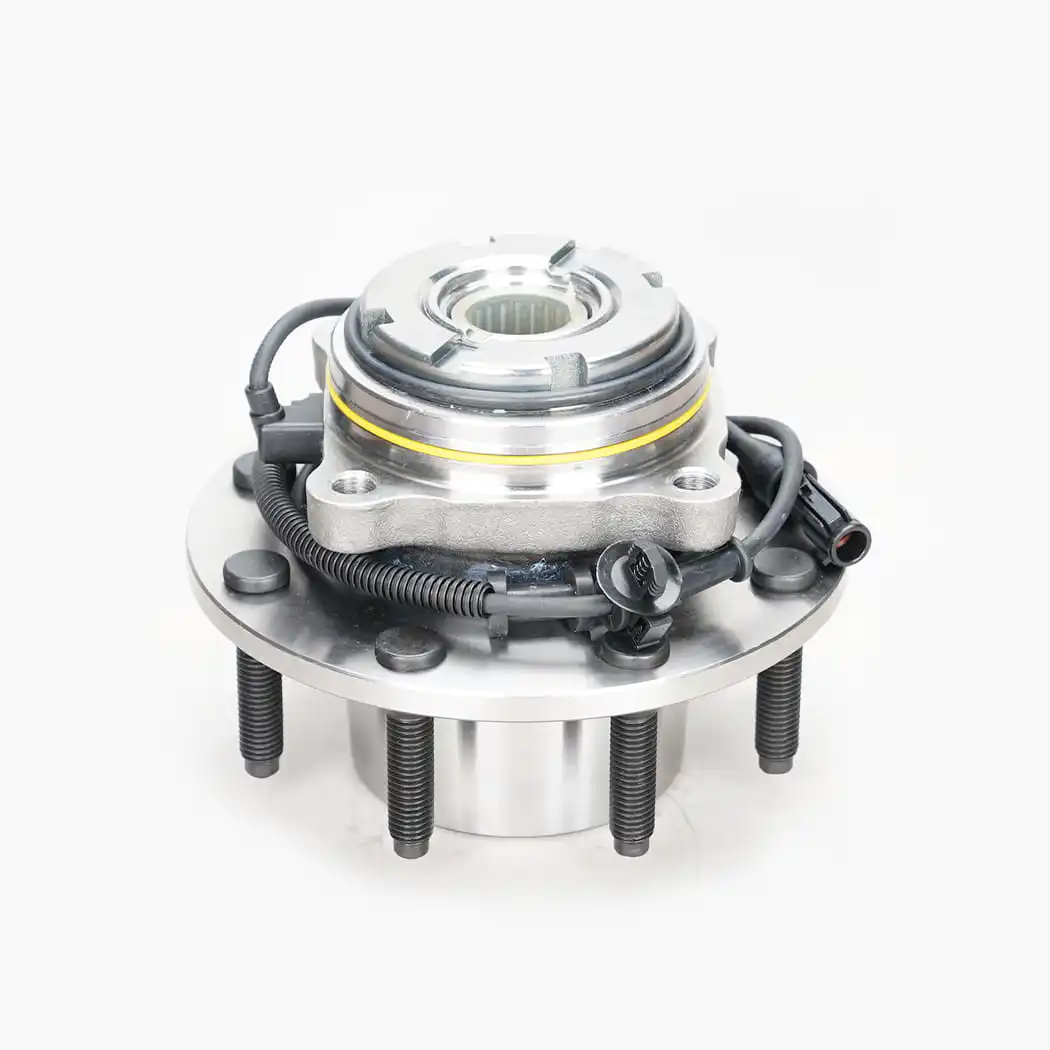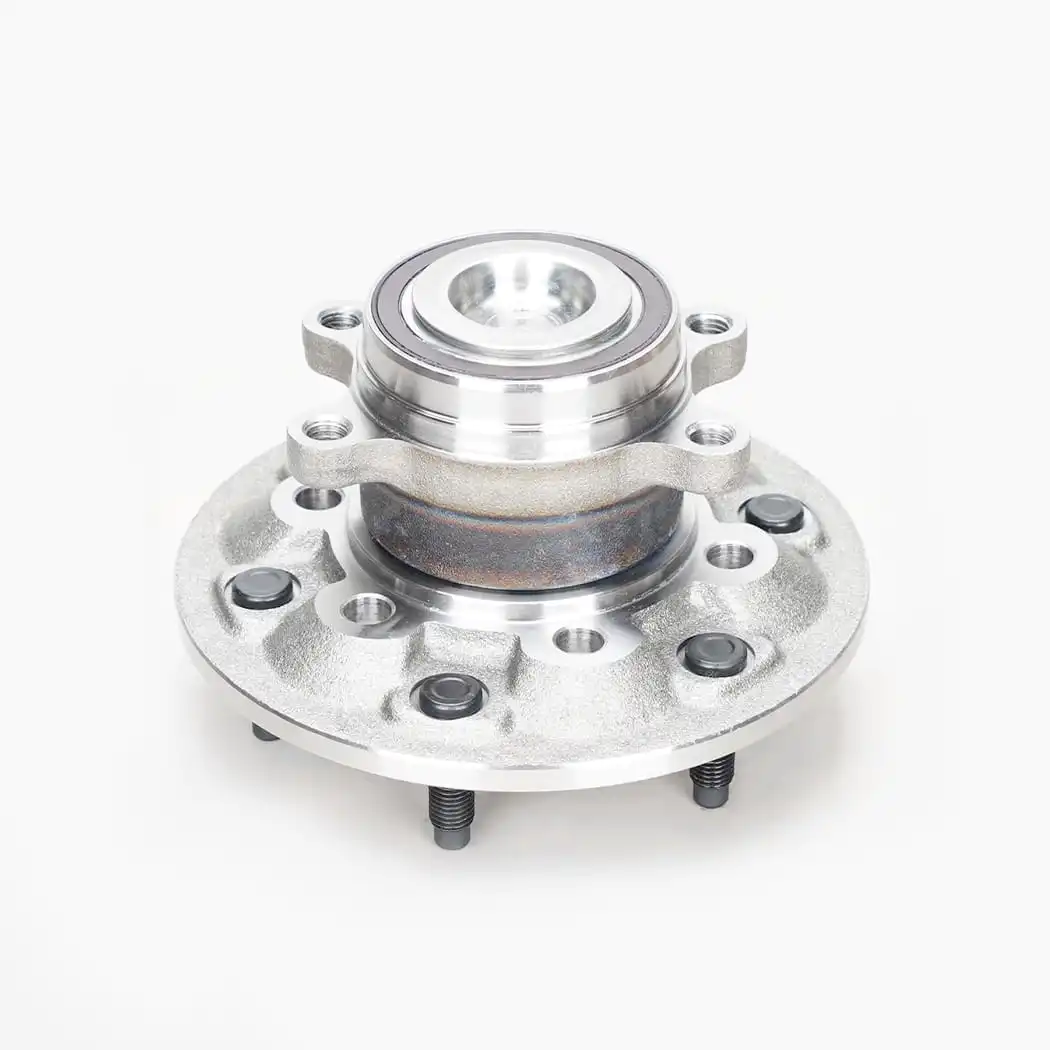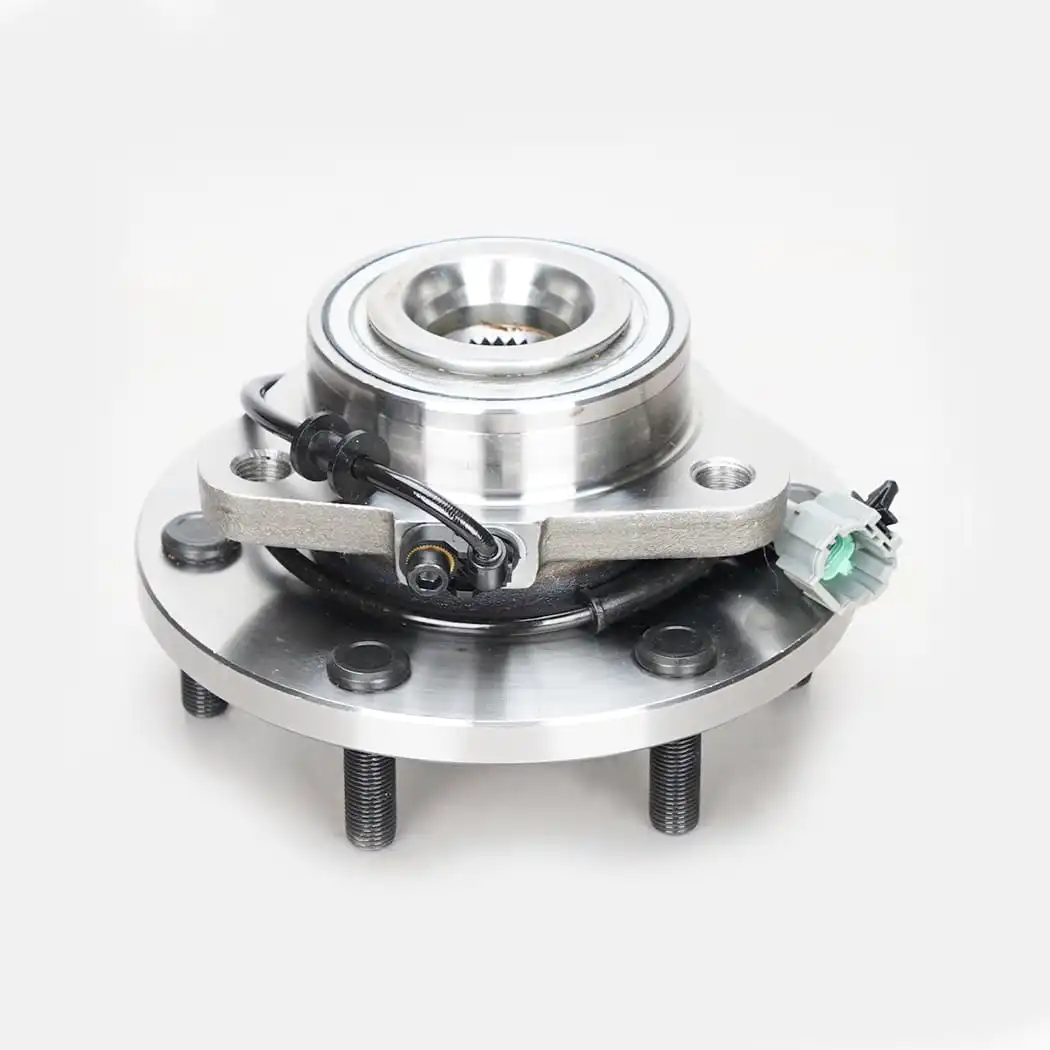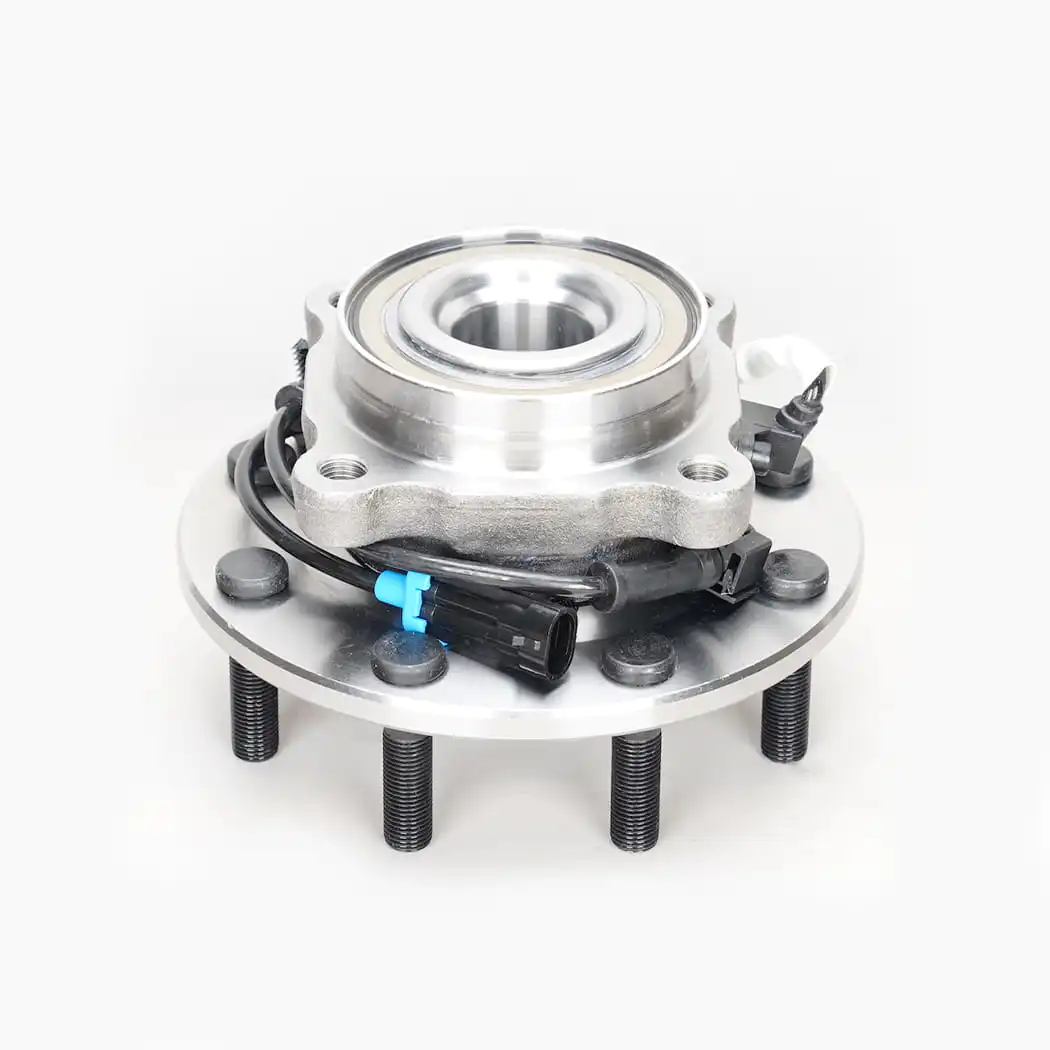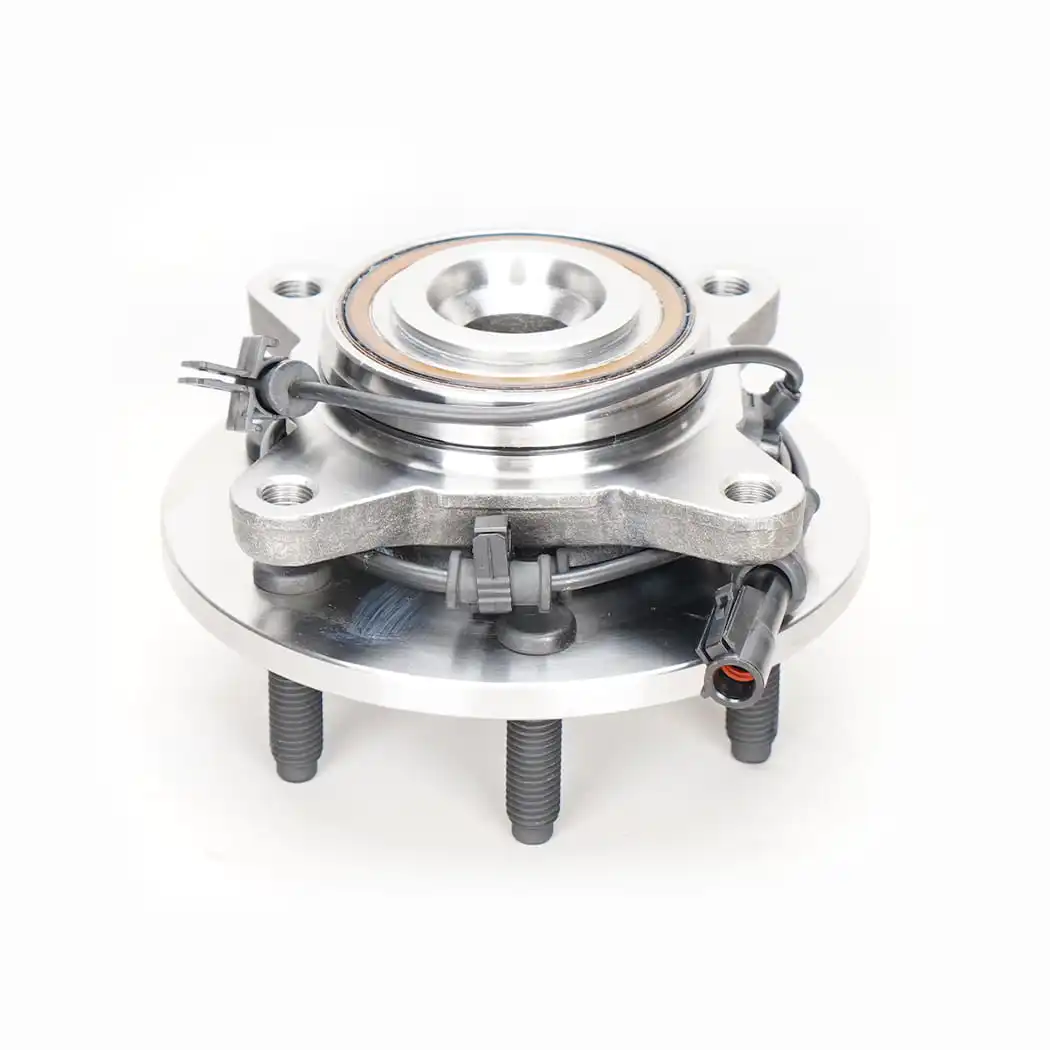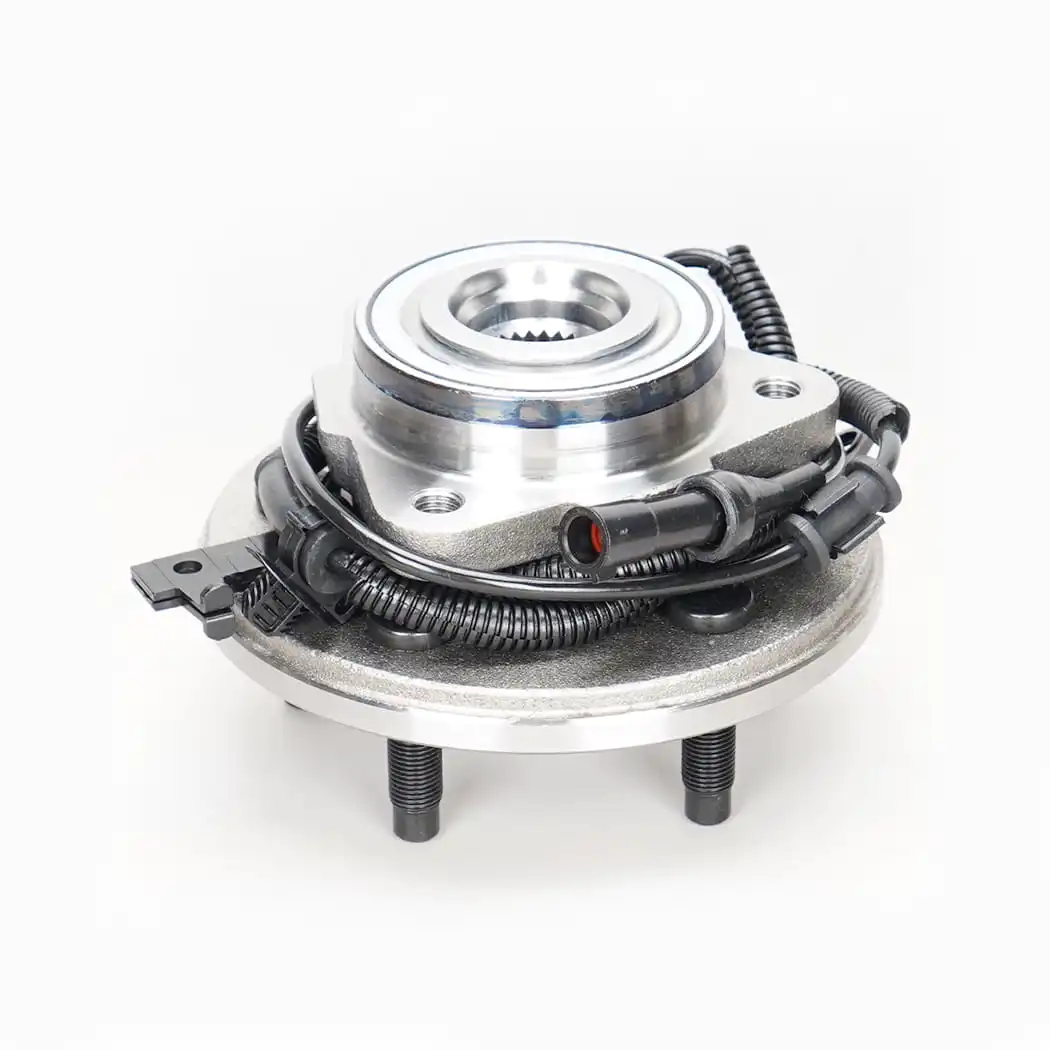
A 2015 Ford F-250 Super Duty came into the shop with a low rumble that changed pitch with road speed and grew worse in turns. The owner ran 35-inch tires, pulled a gooseneck trailer every week, and had just crossed 68,000 miles. The driver-side front hub had measurable play, and it was not the first heavy pickup that week to need a front hub assembly. When the owner asked whether a heavier-duty option existed, the honest answer was more useful than a catalog page: the problem is rarely the label on the box. It is whether the hub's bearing capacity, seal design, flange stiffness, and ABS integration actually match the loads the truck sees.
This article explains what makes a front wheel hub heavy duty, how to match a hub to a specific truck platform, and what to verify before you buy a replacement.
Content
Heavy duty is not a marketing term, at least not when it is doing its job. On a 2500/3500-class pickup, the front hub assembly carries the corner weight of the vehicle, transmits driving torque to the wheel, resists lateral forces in corners, and holds the ABS tone ring in a precise position. The assembly has to manage those loads while clamped between the knuckle and a wheel that is often two sizes larger than stock.
That changes the design priorities compared with a light-duty hub:
A truly heavy-duty front wheel hub is specified to the truck's front GAWR, not to the curb weight. The difference matters: a hub designed for unloaded commuting on stock tires will not last long on a snowplow, a slide-in camper, or a truck with aggressive-offset wheels. The design requirements that matter here are covered in more detail in our review of heavy-duty wheel hubs.
Front hub assemblies for American trucks sort into predictable groups by lug count and axle type. Lug count is the first filter because it identifies the platform family. Six-lug hubs cover many half-ton pickups and SUVs; eight-lug hubs are standard on 3/4-ton and 1-ton single-rear-wheel pickups; ten-lug hubs are found on the front axles of some Ford F-450/F-550 and Ram 4500/5500 chassis.
| Truck platform | Lug count | Typical axle type | Common OE and aftermarket references |
|---|---|---|---|
| Ford F-250 / F-350 Super Duty | 8 | SRW 4WD | F81A-2B663-CE / HA590425 / BR930425 |
| Ford F-450 / F-550 Super Duty | 8 or 10 | DRW 4WD | 7C3Z-1104-E / HA590438 / BR930804 |
| Ram 2500 / 3500 | 8 | SRW or DRW 4WD | 52010206AC / 52010206AD / SP550104 |
| Chevrolet Silverado 2500 HD / 3500 HD | 8 | SRW or DRW 4WD | 25807420 / BR930824 / SP620303 |
| GMC Sierra 2500 HD / 3500 HD | 8 | SRW or DRW 4WD | 25807419 / BR930827 / SP620301 |
These references matter because the same model-year truck can appear in different configurations. Heavy-duty buyers also need to distinguish single-rear-wheel and dual-rear-wheel versions: an F-450 may use the same 8-lug front hub as an F-350 on some models, while later 10-lug front axles take a separate part entirely.
On the Ford Super Duty side, the F-250 and F-350 single-rear-wheel chassis use an 8-lug front hub assembly with an integrated ABS tone ring. A common replacement crosses to F81A-2B663-CE and aftermarket numbers such as HA590425 and BR930425. Some F-450 and F-550 trucks run the same 8-lug front hub, while trucks with the 10-lug front axle take a different assembly, so the lug count is a required check before ordering.
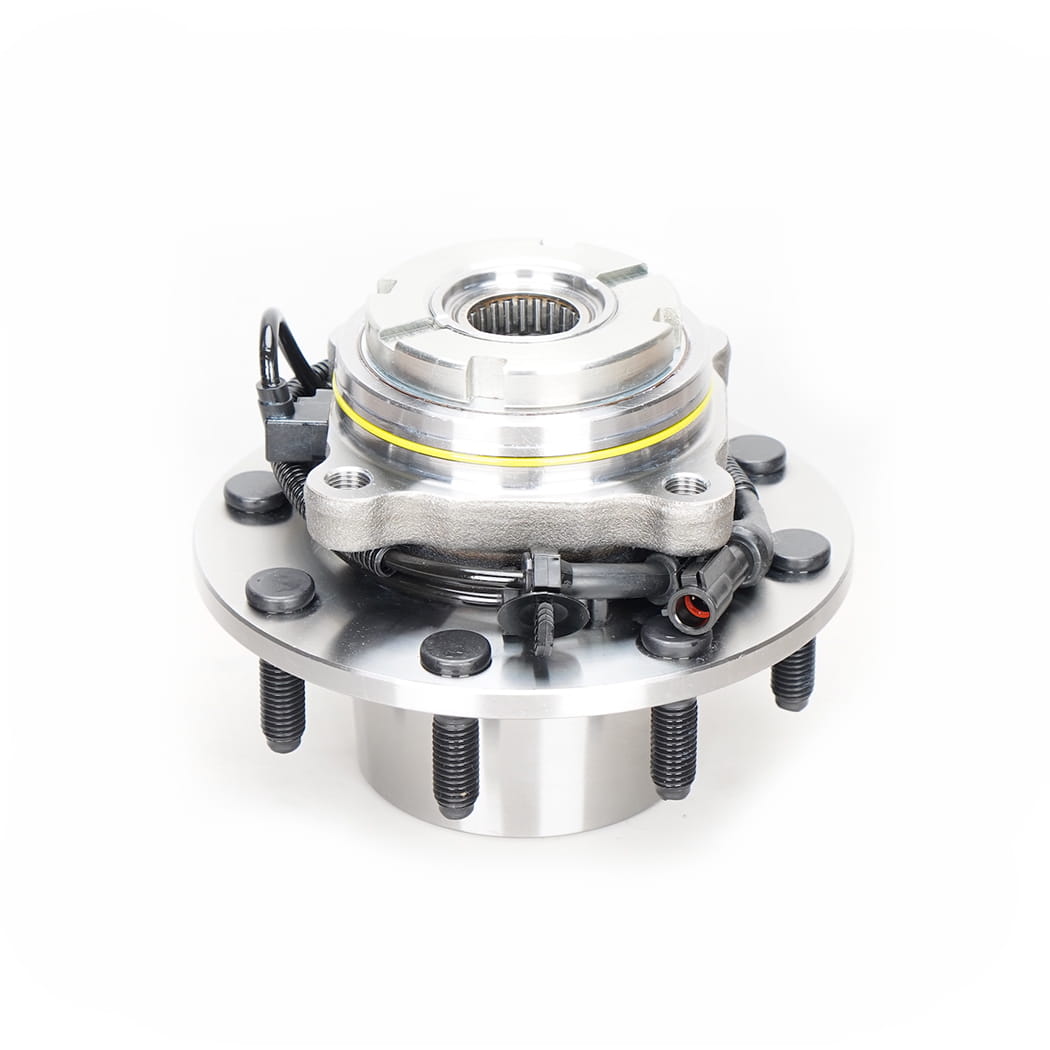 HANHUB 515077 Front Wheel Hub and Bearing Assembly Compatible with F-250 SUPER DUTY F-350 HANGZHOU HANJI AUTO PARTS.CO.,LTD.View Product →
Ram 2500 and 3500 trucks follow the same logic. The 8-lug front hub for these platforms is listed under OEM number 52010206AC and the newer 52010206AD, with the aftermarket version widely referenced as SP550104. Because Ram moved between coil-sprung and torsion-bar front ends over the years, the hub unit itself usually matches by spline count and tone ring rather than by knuckle shape.
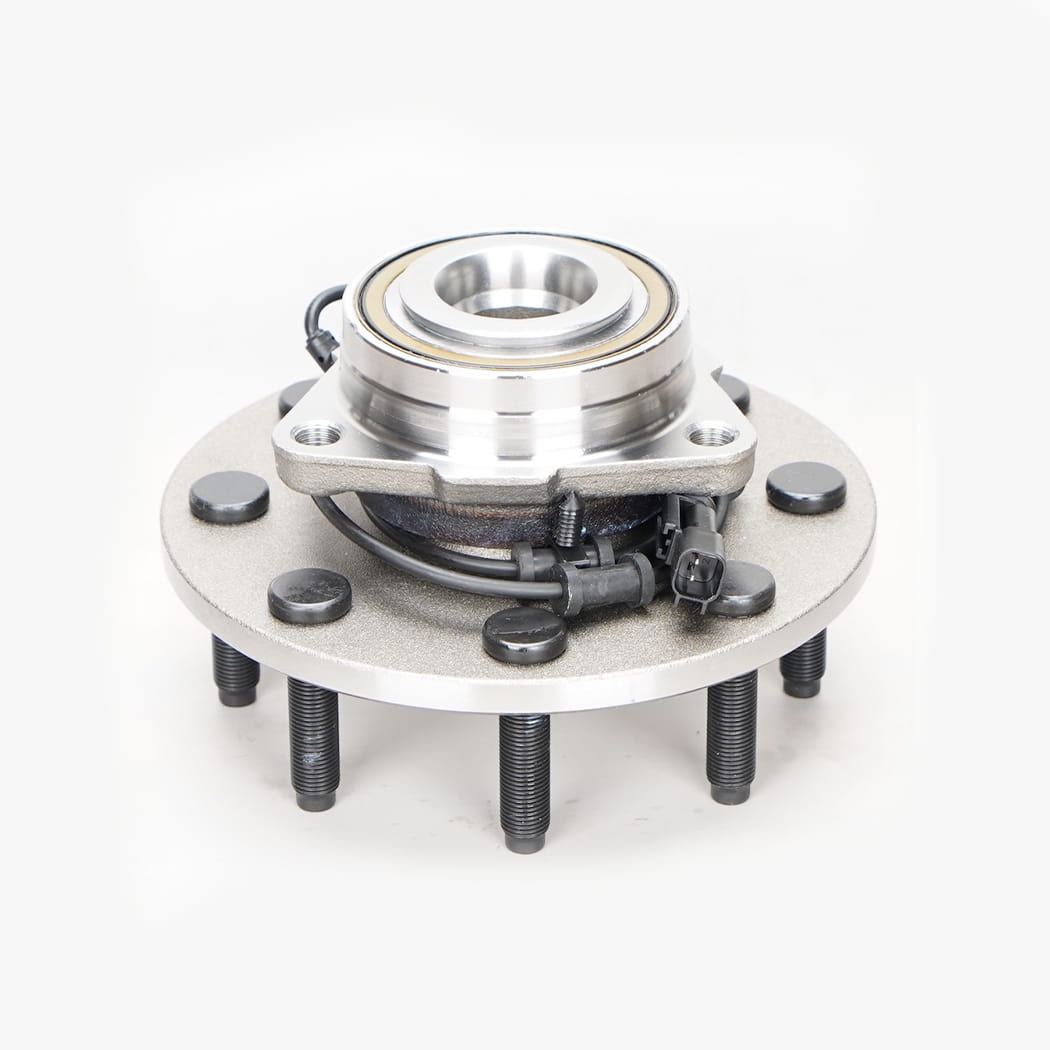 HANHUB 515114 Front Wheel Hub and Bearing Assembly Compatible with RAM 2500 PICKUP RAM 350HANGZHOU HANJI AUTO PARTS.CO.,LTD.View Product →
For General Motors heavy pickups, the Silverado 2500 HD and 3500 HD, along with the GMC Sierra 2500 HD and 3500 HD, use an 8-lug unitized front hub. The familiar OE-style reference is 25807420 for Chevrolet applications, with Sierra service parts pointing to 25807419; aftermarket numbers BR930824, SP620303, and 23203922 appear across many catalogs.
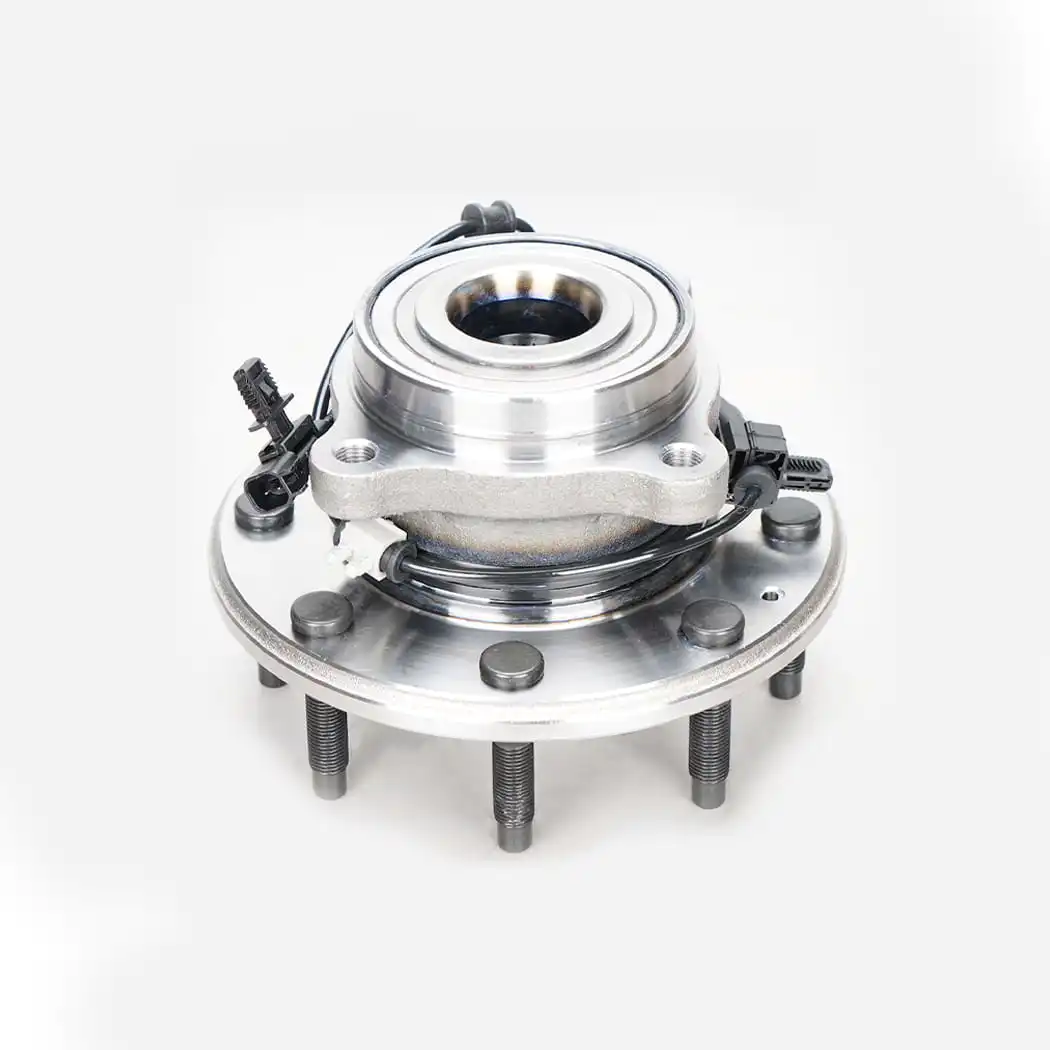 HANHUB 515145 Front Wheel Hub and Bearing Assembly Compatible with Chevy Silverado 2500 HDHANGZHOU HANJI AUTO PARTS.CO.,LTD.View Product →
The product page should give you more than a photo. Look for complete cross references, including the OEM number and at least one aftermarket interchange number. A hub listed with a single reference is harder to trace and easier to get wrong.
A manufacturer's production process is part of the fitment equation. Judge the output by whether the hub is built from OE-grade castings, whether the bearing preload is set at the factory, and whether the packaging protects the sensor and bearing surfaces. That is why reputable suppliers document their manufacturing and testing processes in the open.
Even a correctly specified heavy-duty hub will fail early if the installation is wrong. The bearings are set at the factory, so your job is to protect them during assembly.
Once the hub is in service, the biggest variable is the wheel and tire package. Wide wheels with less backspacing increase leverage on the bearing. Heavier tires add unsprung mass that the bearing cannot shed. If the truck runs larger-than-stock tires, cut the inspection interval in half and check for play whenever the wheel is off the ground.
Front hub replacement is one of those jobs where the price of the part is small compared with the cost of a wheel-end failure on a loaded truck. The right heavy-duty front hub assembly matches the truck's GAWR, lug pattern, ABS tone ring, and real service conditions. Verify the references, install it cleanly, and confirm the torque spec before the truck leaves the shop.
• ADD: 42705 Grand River Avenue, Suite 201, Novi. Michigan 48375, USA.
© Copyright 2017 HANGZHOU HANJI AUTO PARTS.CO.,LTD. All Rights Reserved. Wheel Hub Unit Manufacturer