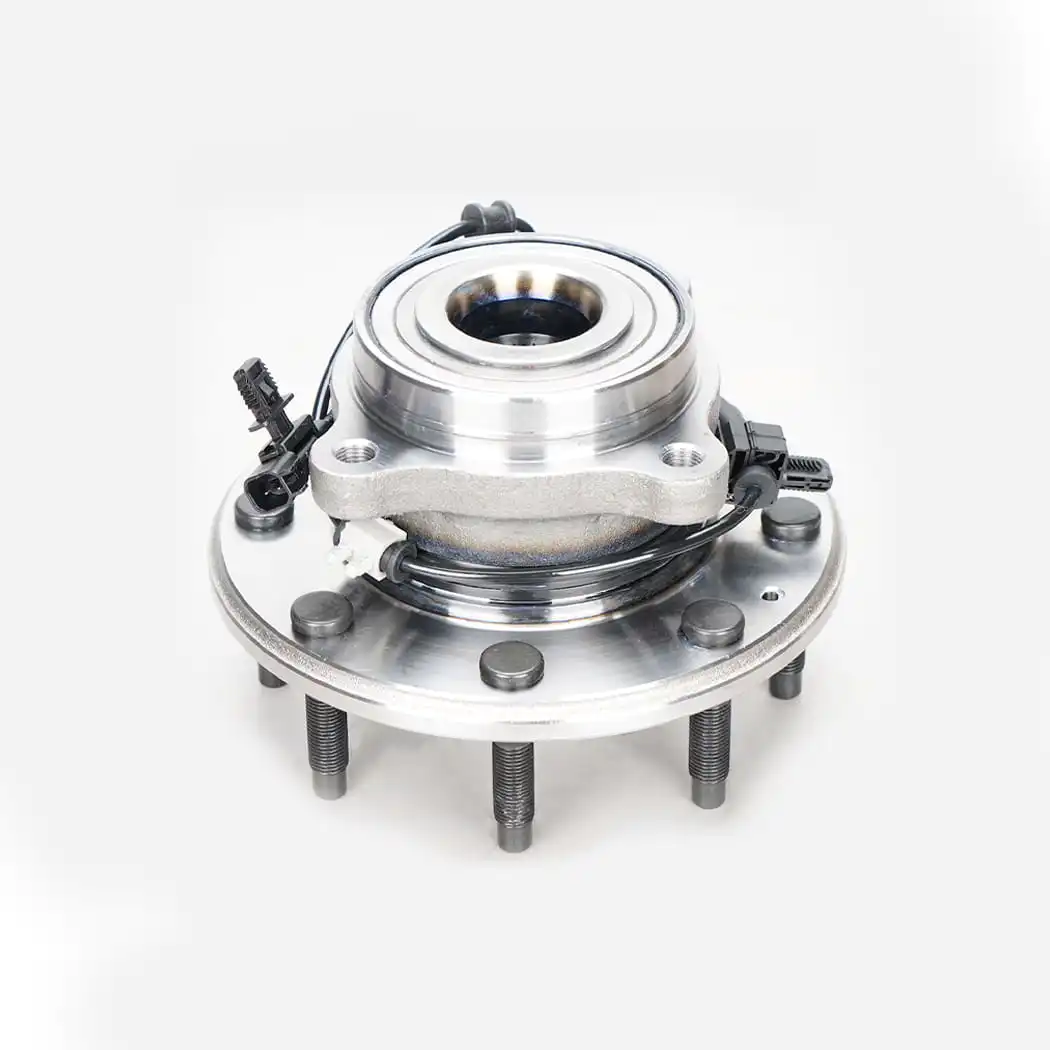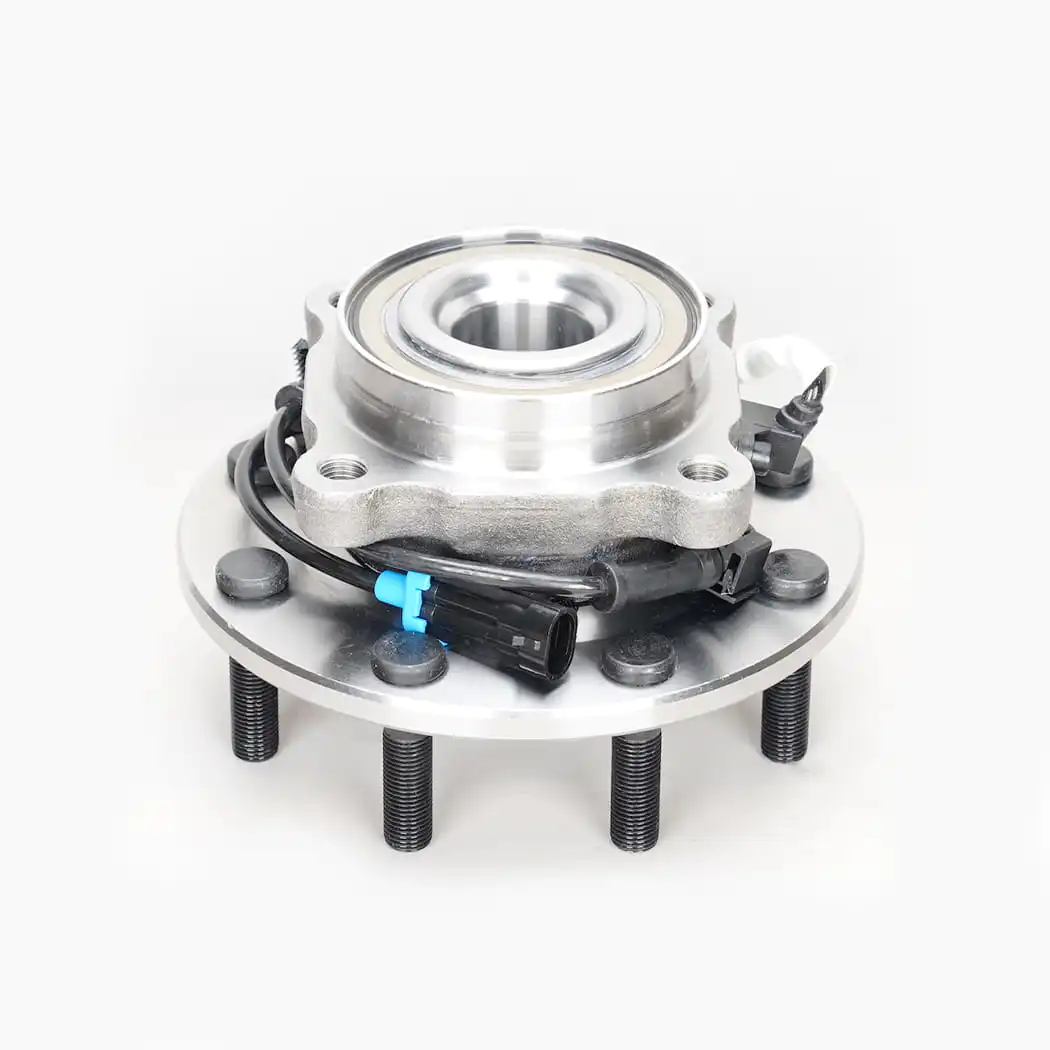
Vehicle wheel bearings carry out a job most drivers never think about: they let the wheels turn with minimum friction while holding up the weight of the vehicle, the heat of braking and the punishment of thousands of miles of rough road. When one begins to wear, the people inside the car usually notice first, thanks to a hum or drone that rises and falls with road speed. For technicians, distributors and owners alike, understanding how these bearings work, why they fail and how to match a replacement correctly makes every repair faster and safer.
Hangzhou Hanji Auto Parts Co., Ltd. builds its business around wheel hub units, and its US-based affiliate WHB AMERICA LLC handles packaging and distribution for the North American aftermarket. That perspective, with manufacturing on one side of the ocean and warehousing on the other, shapes how we think about vehicle wheel bearings, and it is the perspective we share below.
Content
A wheel bearing is a precision assembly of rolling elements and hardened races that sits between the wheel hub and the axle or steering knuckle. Its first job is to let the wheel rotate freely. Its second job is harder: it must carry the radial load of the vehicle's weight, absorb the axial loads created by cornering and braking, and keep doing both for tens of thousands of miles without adjustment.
Inside the assembly, grease reduces friction between the rolling elements and the races, while seals keep water, road salt and grit out. Front bearings generally face the toughest conditions because they support weight and steering forces at the same time, while rear bearings work under a more constant load. Both are safety critical. A bearing that seizes or collapses can damage the spindle, the knuckle and the ABS system, and in the worst case it can separate a wheel from the vehicle.
Over the past four decades, wheel bearings have evolved through three clearly defined generations, and the generation you are working with determines how you replace it.
Tapered or angular contact bearings supplied as separate components. They must be pressed into a hub or knuckle and preloaded by hand. They survive on older vehicles and light trailers, but they have largely disappeared from modern passenger cars.
A bearing with an integrated flange on the outer ring, which removes the need for a separate hub in some applications. It is still pressed into a surrounding housing and retained by the knuckle or axle.
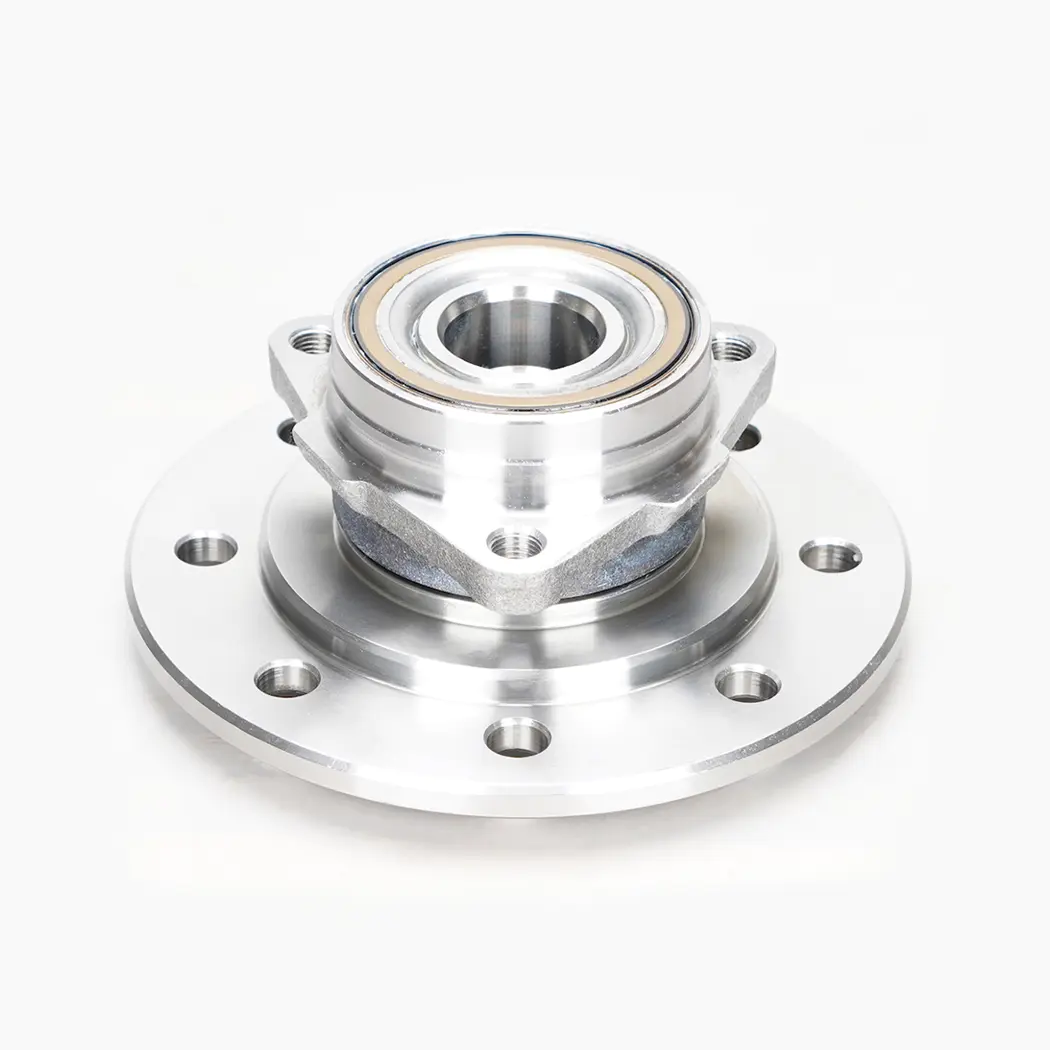
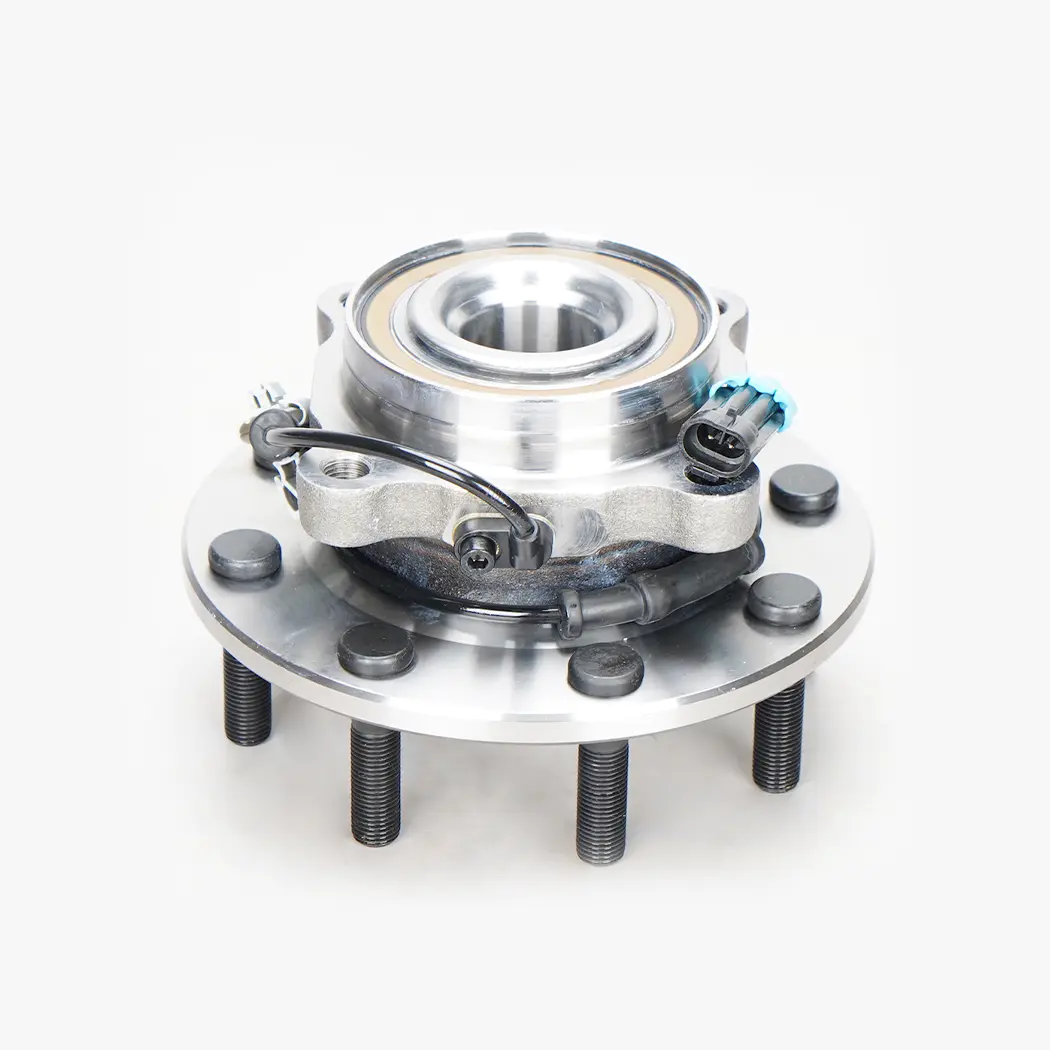
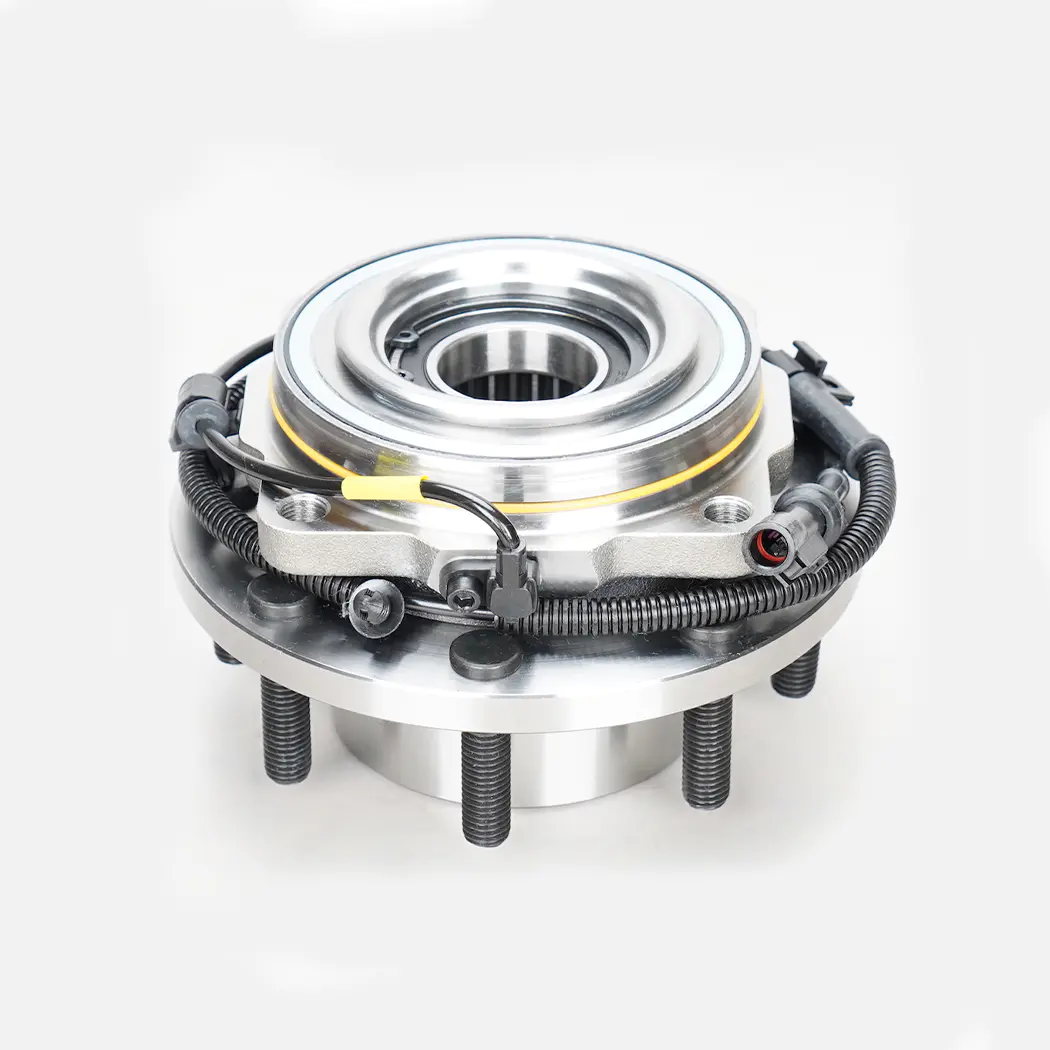
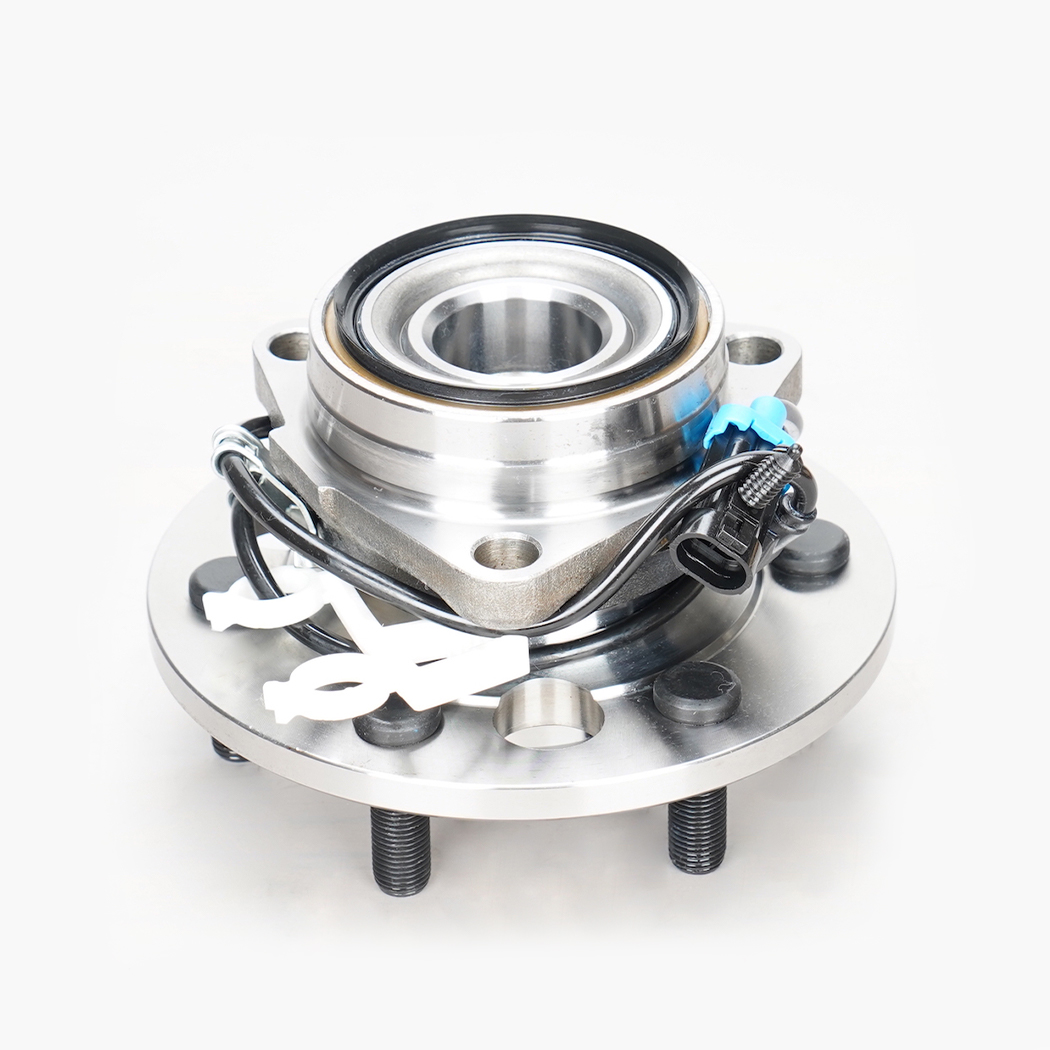
The integrated wheel hub and bearing assembly that dominates today's aftermarket. The hub flange, bearing races, seals, grease and ABS sensor ring are combined into one sealed, pre-set cartridge. Installation involves no preload measurement and no repacking of grease.
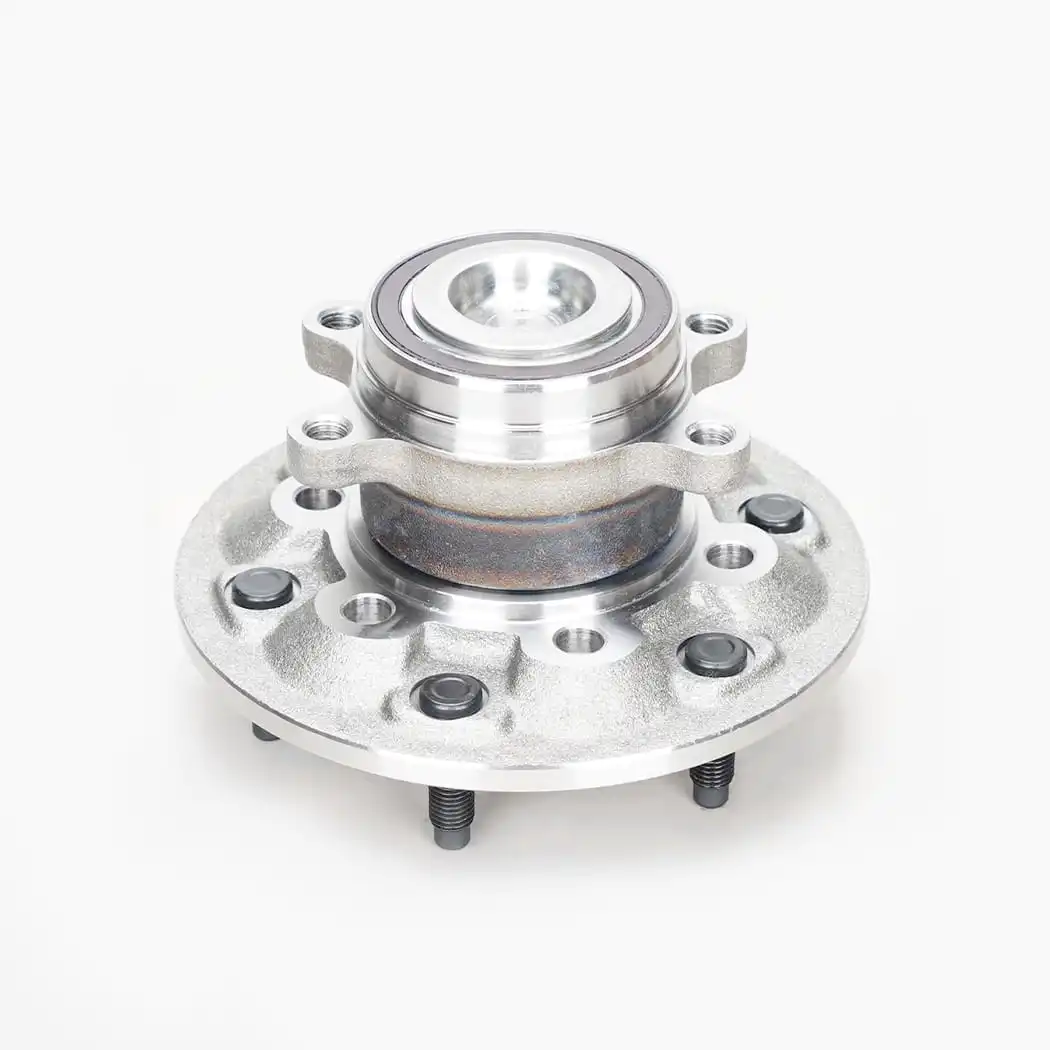
A typical example is the rear hub and bearing assembly for the Honda CR-V, which replaces OE reference 42200TLBA51 together with aftermarket numbers such as 912737, and uses a five-bolt flange.
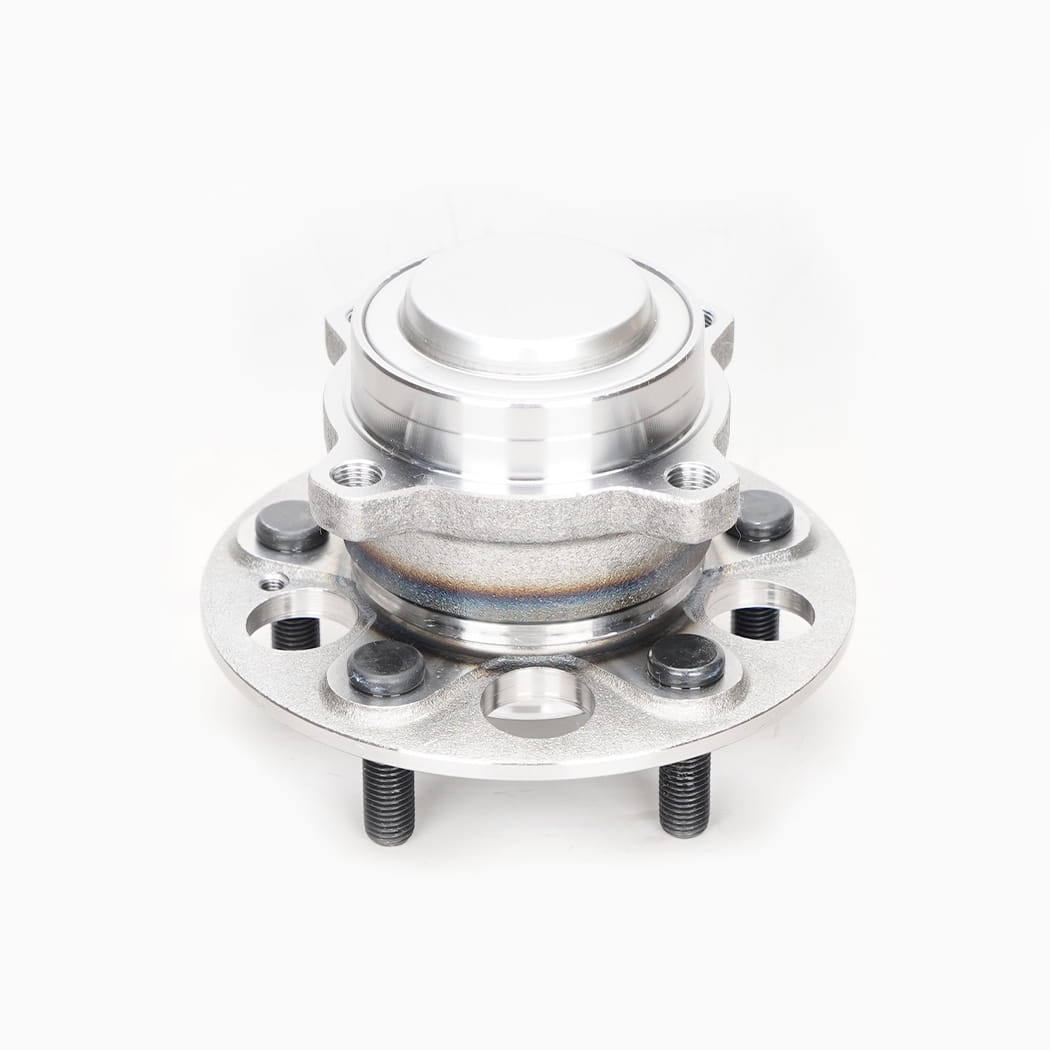 HANHUB 512633 Rear Wheel Hub and Bearing Assembly Compatible with CR-V Replaces 42200-TLBAHANGZHOU HANJI AUTO PARTS.CO.,LTD.View Product →
Bearing wear rarely appears without warning. The symptoms below are the ones our service customers report most often, and they tend to develop in roughly this order.
Noise that changes character when the steering is loaded in one direction is a strong clue that the bearing, rather than the tyre or the road surface, is the source.
The two terms are often used interchangeably, but they describe different things. A wheel bearing is the rolling element set itself, while a wheel hub assembly is the complete unit of hub flange, bearing, seals, grease and sensor ring that bolts to the knuckle or axle. On most vehicles built since the late 1990s the two are supplied as one sealed part, which is why a replacement job today usually means unbolting one assembly and bolting on another instead of pressing bearings in and out of a housing.
For buyers, the practical difference matters when ordering: a hub assembly must match the wheel position, the bolt pattern, the ABS configuration and the vehicle platform, not just the bearing bore size.
Bolt count and wheel position are the fastest way to narrow a catalog search. The table below summarises how the most common North American applications break down.
| Wheel Position | Typical Vehicle Families | Bolt Count | Common Use |
|---|---|---|---|
| Front | Ford F-150, Ranger, Explorer, Expedition | 5 or 6 | Pickup and SUV front corners |
| Rear | Honda CR-V, Mazda 3, Mazda 5 | 5 | Compact cars and crossovers |
| Front | Chevrolet Silverado, GMC Sierra, Ram 2500/3500 | 8 | Light and heavy-duty truck axles |
| Front | Toyota 4Runner, Tacoma, FJ Cruiser, Lexus GX | 4 | Japanese trucks and SUVs |
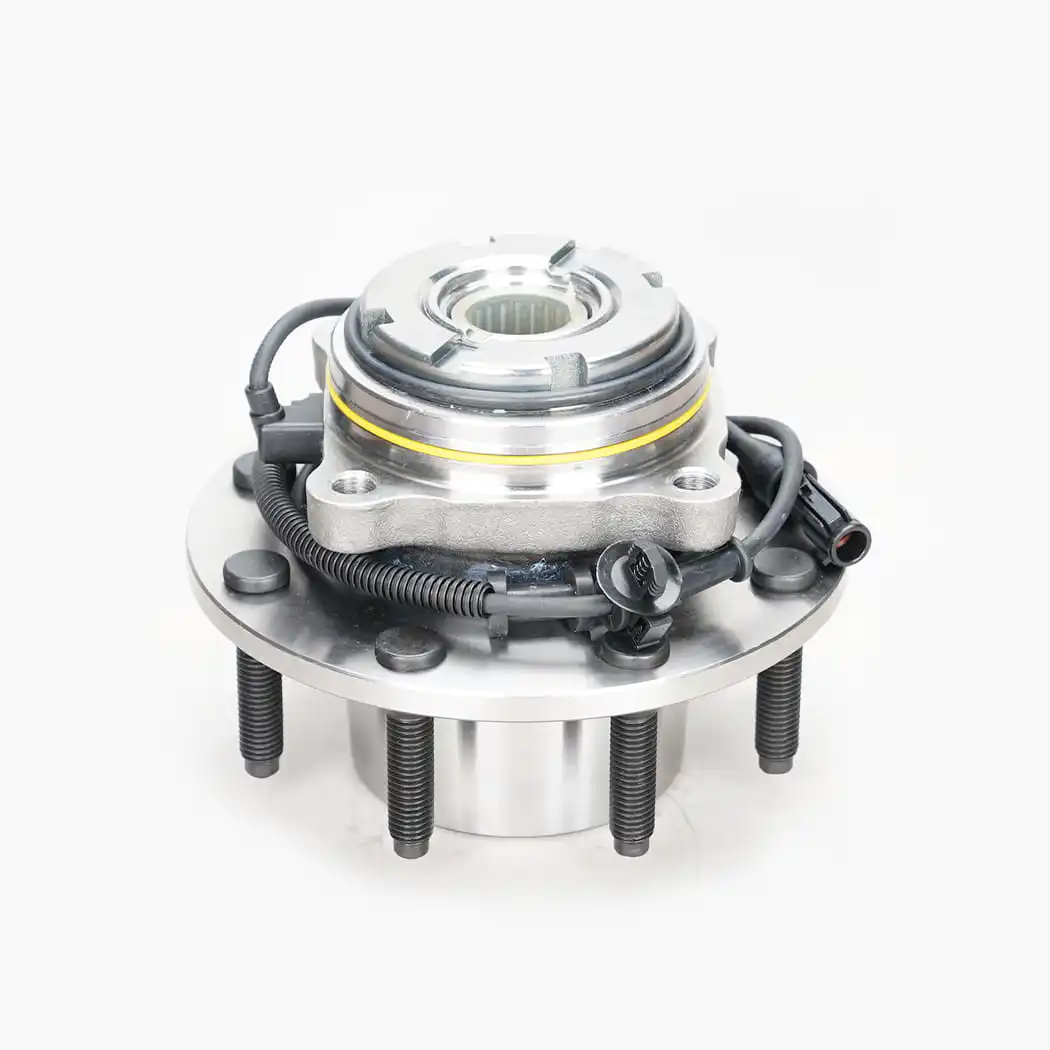
| Front | Ford F-450/F-550 Super Duty, Ram 4500/5500 | 10 | Heavy commercial and fleet vehicles |
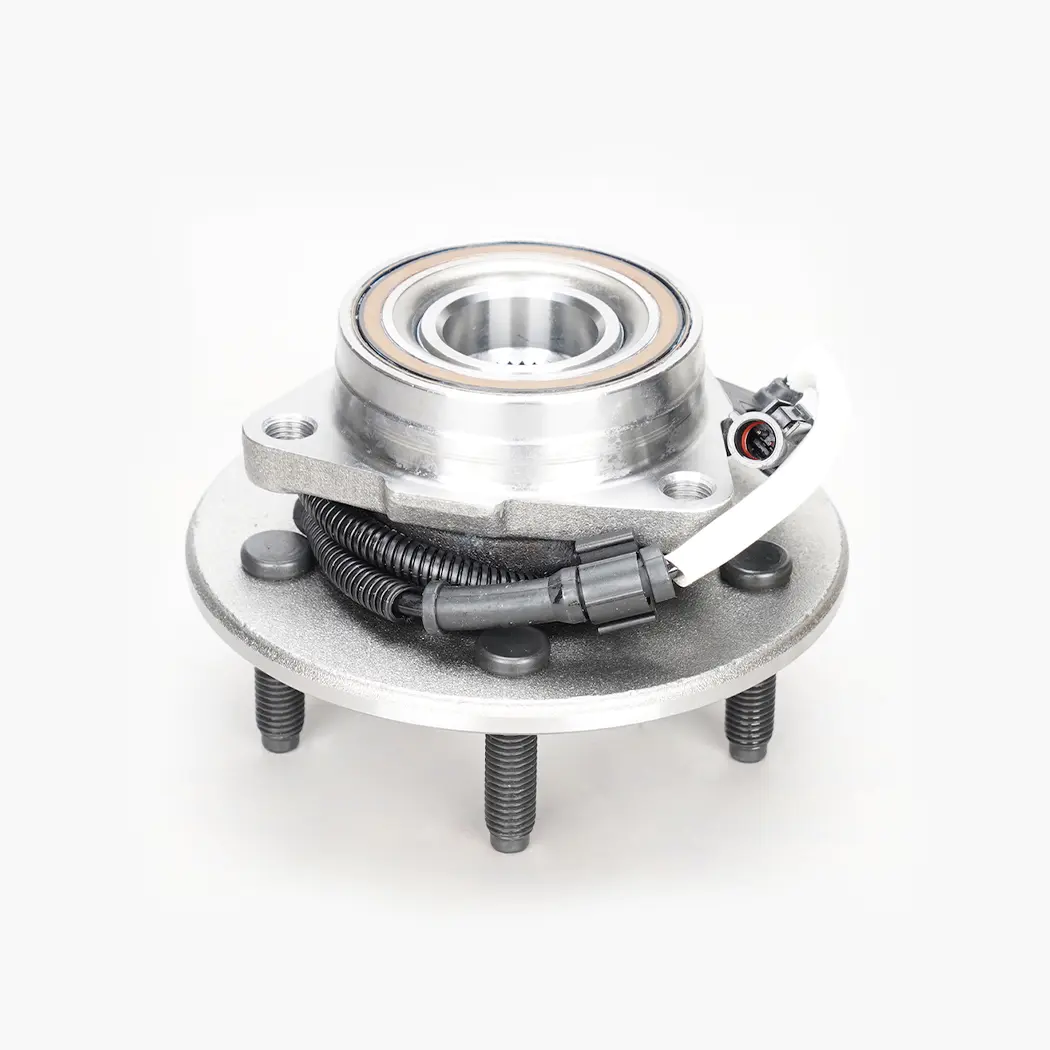
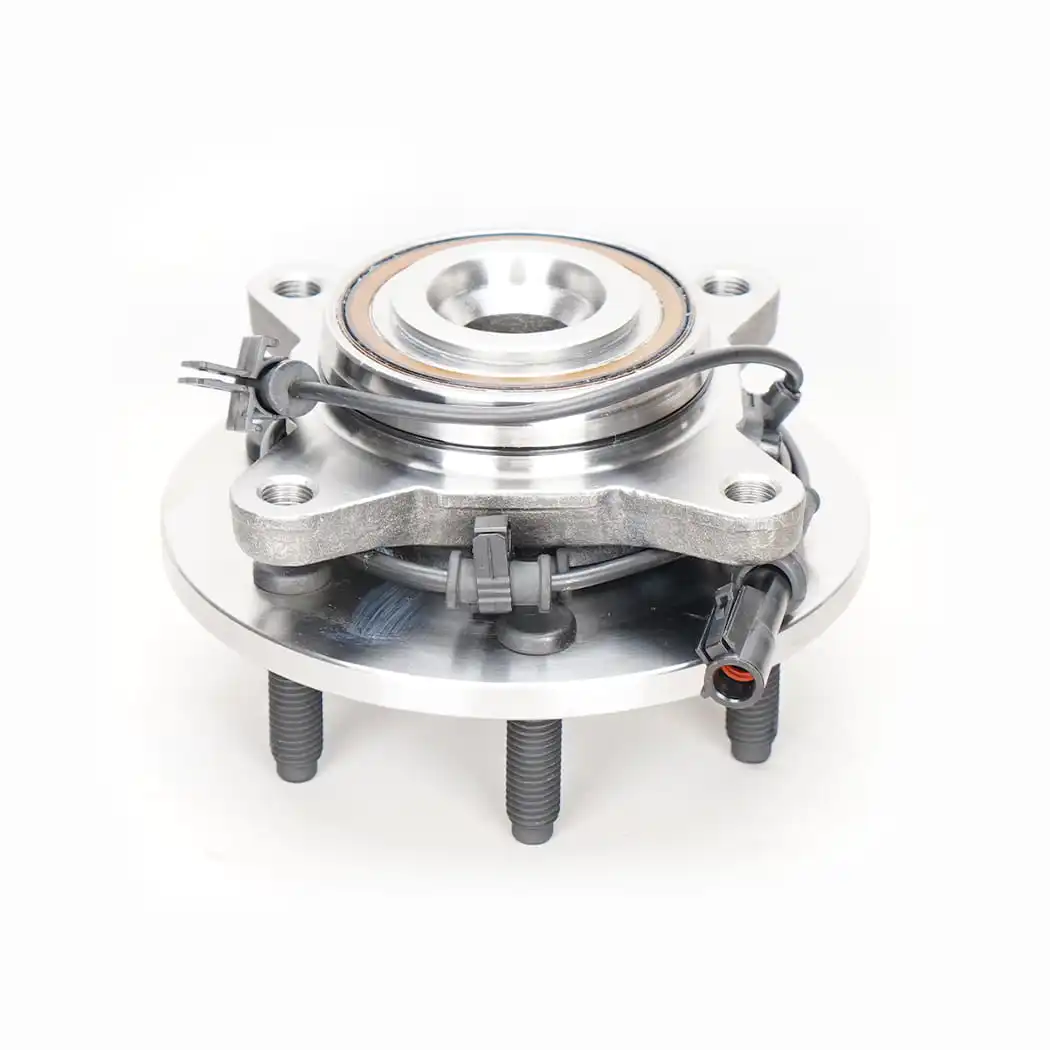
A good example from our range is the five-bolt front hub and bearing assembly used on the Ford Explorer, Explorer Sport Trac and Mercury Mountaineer.
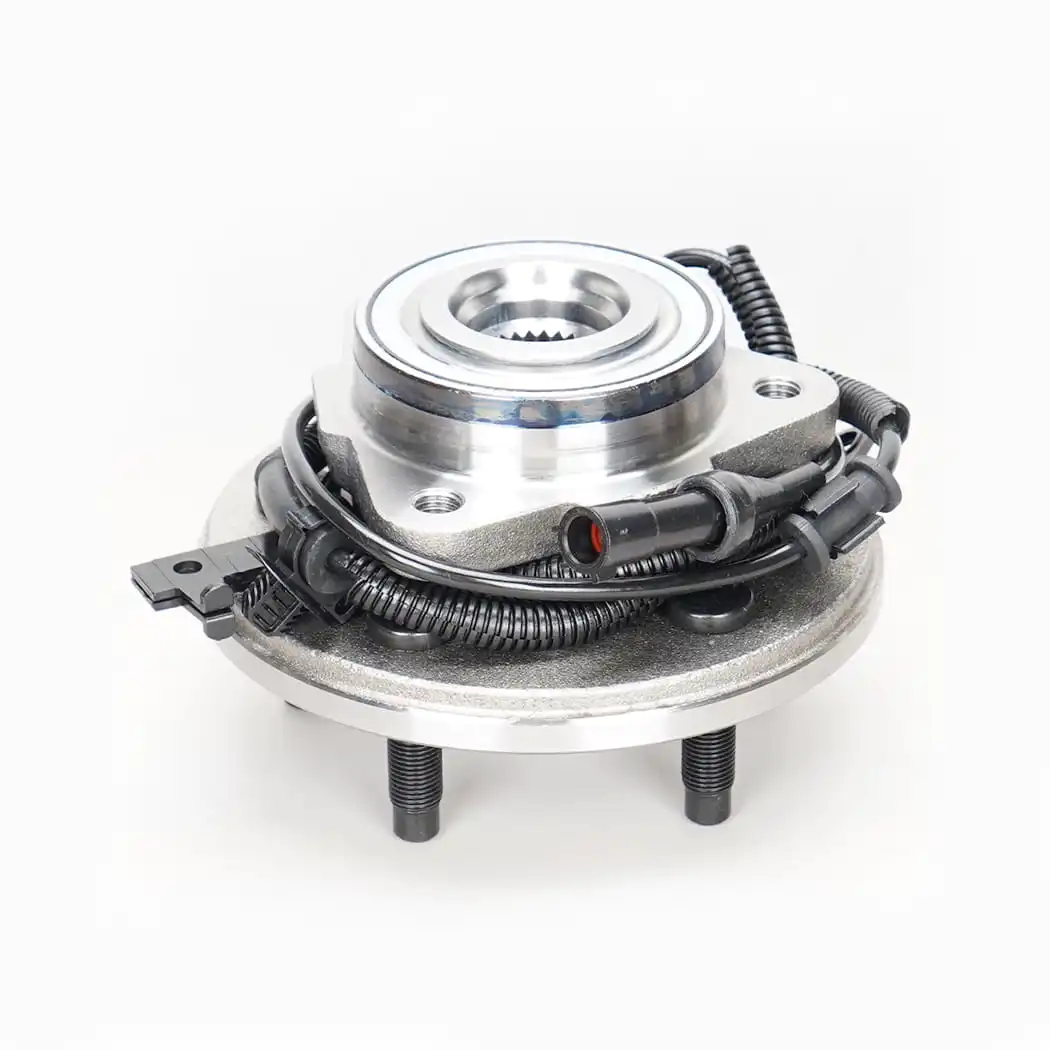 HANHUB 515078 Front Wheel Hub and Bearing Assembly Compatible with Explorer Explorer SportHANGZHOU HANJI AUTO PARTS.CO.,LTD.View Product →
Because one wheel hub assembly may fit several model years and several badges, catalogues rely on interchange numbers rather than a single part number. When you compare listings you will usually see three families of references.
Matching any one of these numbers, together with the correct bolt count and wheel position, is generally enough to confirm a replacement. A reliable supplier publishes the full interchange list so that a workshop stocking three different brands of part number can still find the same unit.
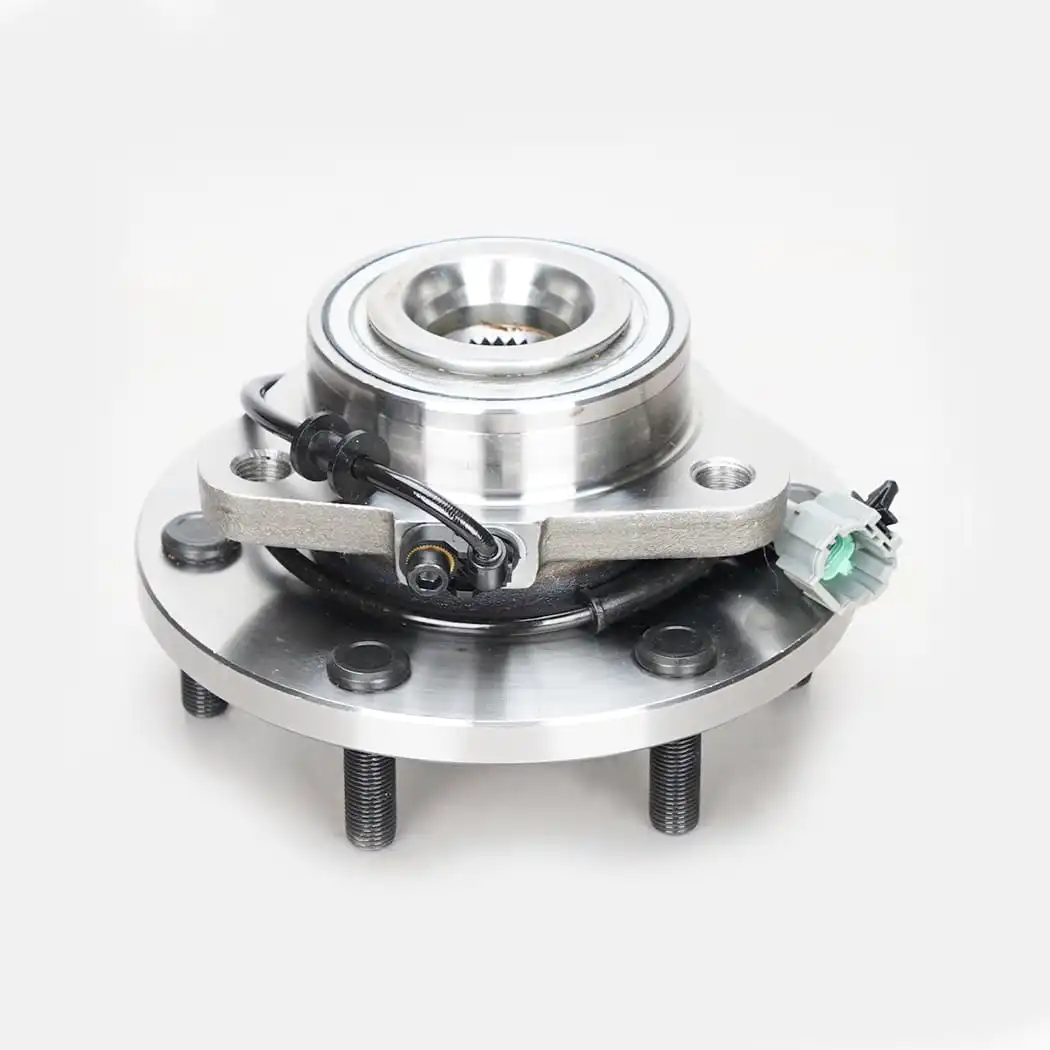
Where a platform is shared across several models, as it is with the Toyota 4Runner, FJ Cruiser, Tacoma and Lexus GX series, a single assembly can serve a very wide slice of the car parc.
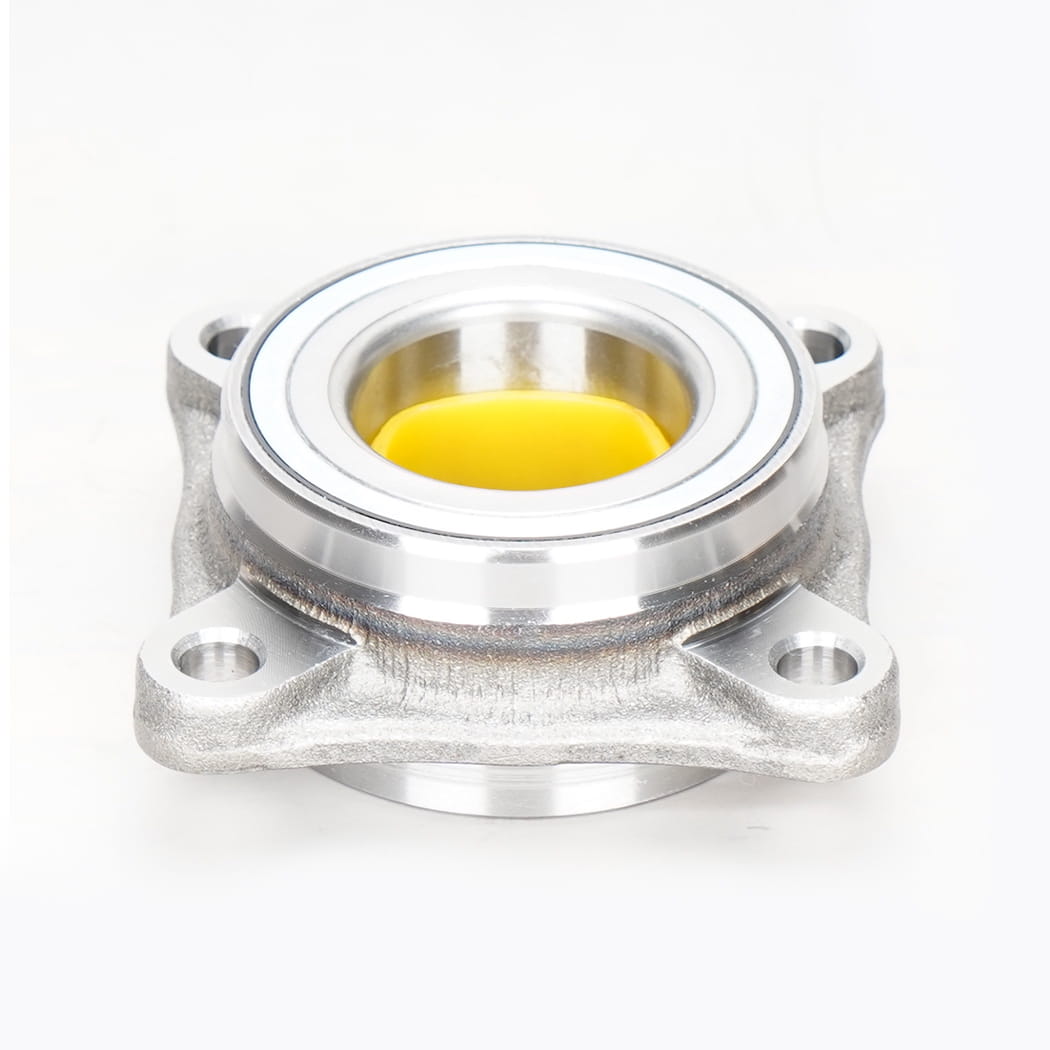 HANHUB 515040 Front Wheel Hub and Bearing Assembly Compatible with GX460 GX470 4RUNNER FJ HANGZHOU HANJI AUTO PARTS.CO.,LTD.View Product →
Wheel bearings are toleranced in microns, so the difference between a bearing that lasts 30,000 miles and one that lasts 130,000 miles is decided long before it reaches a shelf. Our own production follows original equipment specifications for material, heat treatment, race geometry and seal design, and each batch is verified in an in-house laboratory before packing.
We also control packaging ourselves, which lets us print and assemble retail-ready boxes rather than shipping loose units to a distributor. For North American customers, finished stock is held at the Novi, Michigan facility operated by WHB AMERICA LLC, so orders can be picked, packed and dispatched locally instead of waiting on an ocean container. You can read more about the production floor on our factory page.
A hub assembly replacement is not difficult, but it rewards care. The steps below reflect what we recommend to workshops that fit our parts every day.
Regular inspection is the cheapest protection there is. For a more detailed walkthrough, our guide to maintaining and replacing wheel hub bearings covers the same ground with additional technical detail.
Vehicle wheel bearings are small parts with an outsized influence on how a car feels and how safely it stops. Choosing a supplier that can document its materials, publish its interchange data and hold stock close to the customer removes most of the risk from the job. Whether you are a warehouse distributor planning a season of inventory or a technician replacing a single noisy corner, the fundamentals stay the same: match the unit correctly, install it cleanly, and treat the bearing as the precision component it is.
• ADD: 42705 Grand River Avenue, Suite 201, Novi. Michigan 48375, USA.
© Copyright 2017 HANGZHOU HANJI AUTO PARTS.CO.,LTD. All Rights Reserved. Wheel Hub Unit Manufacturer