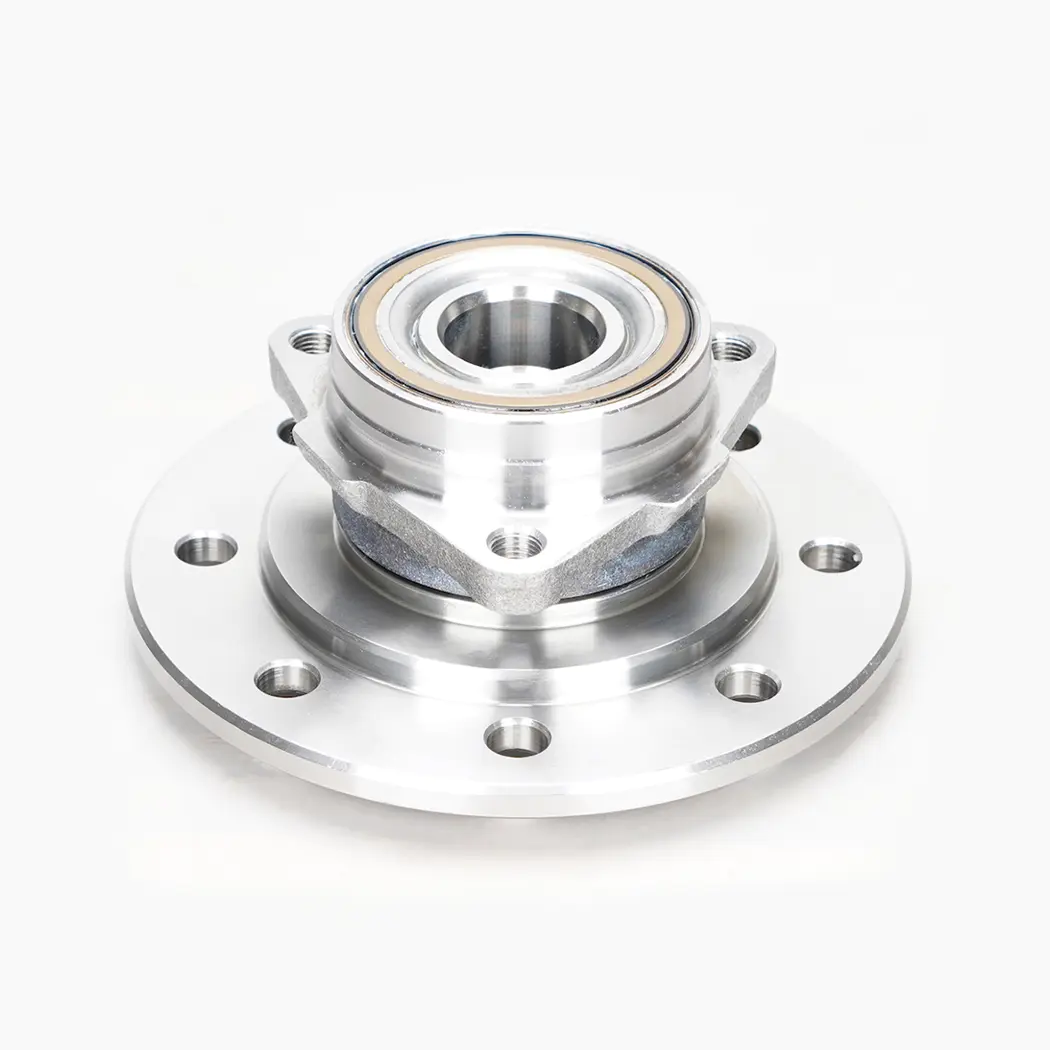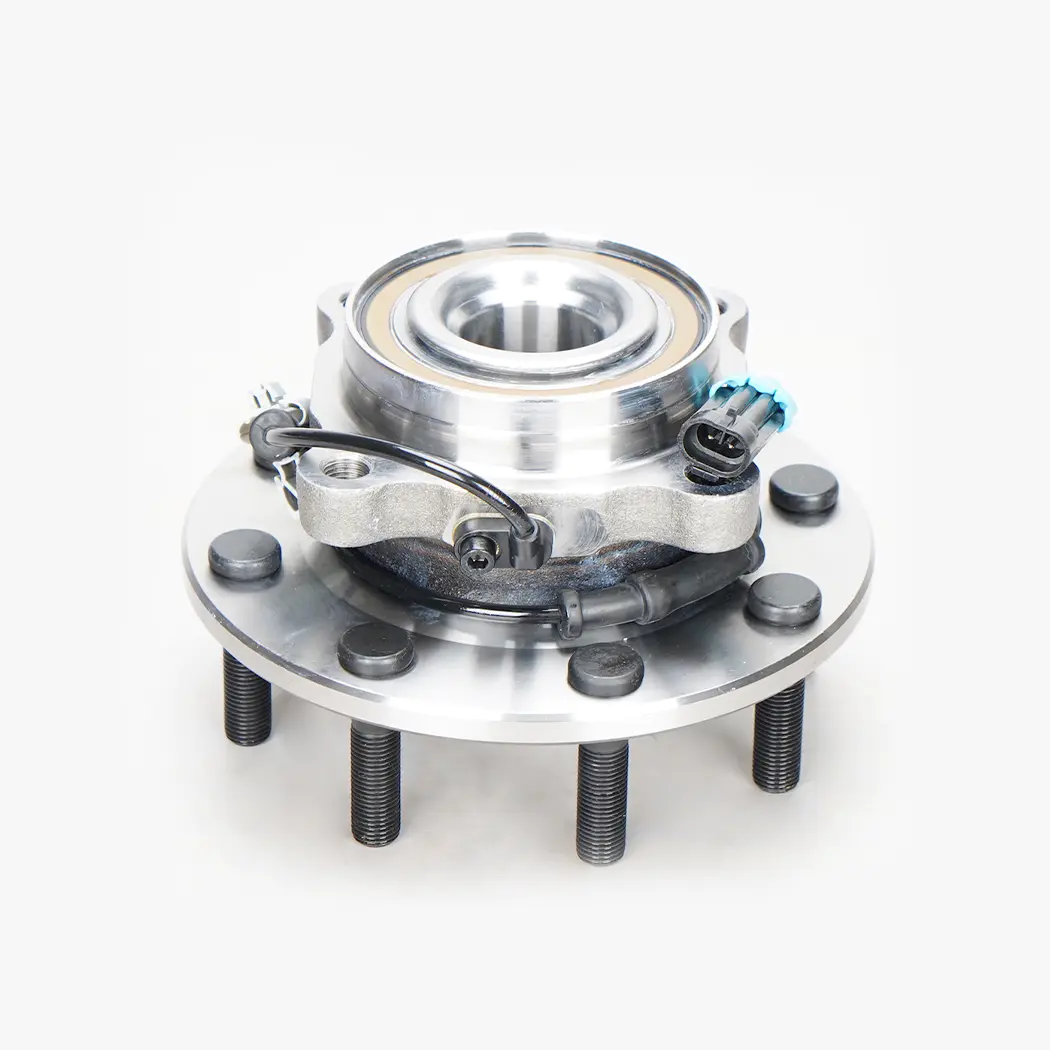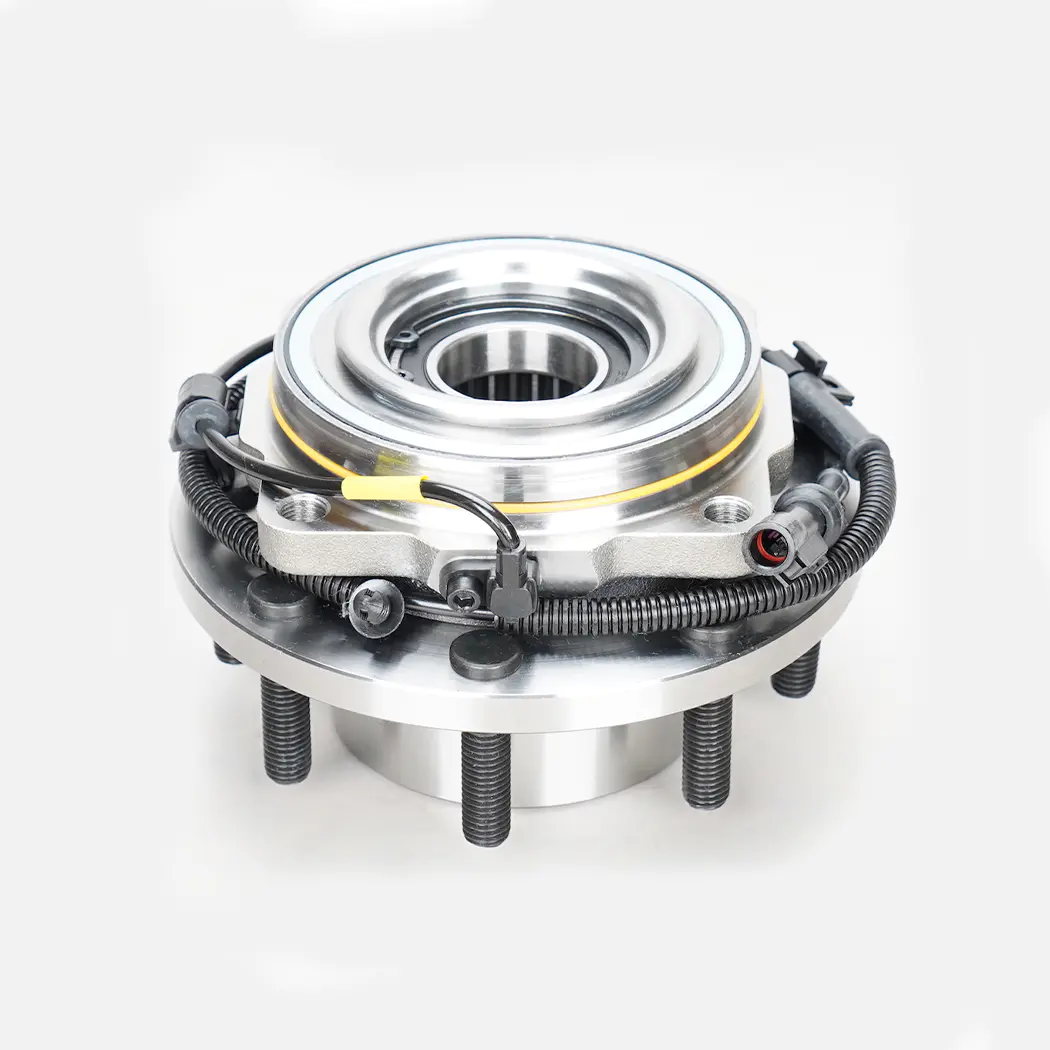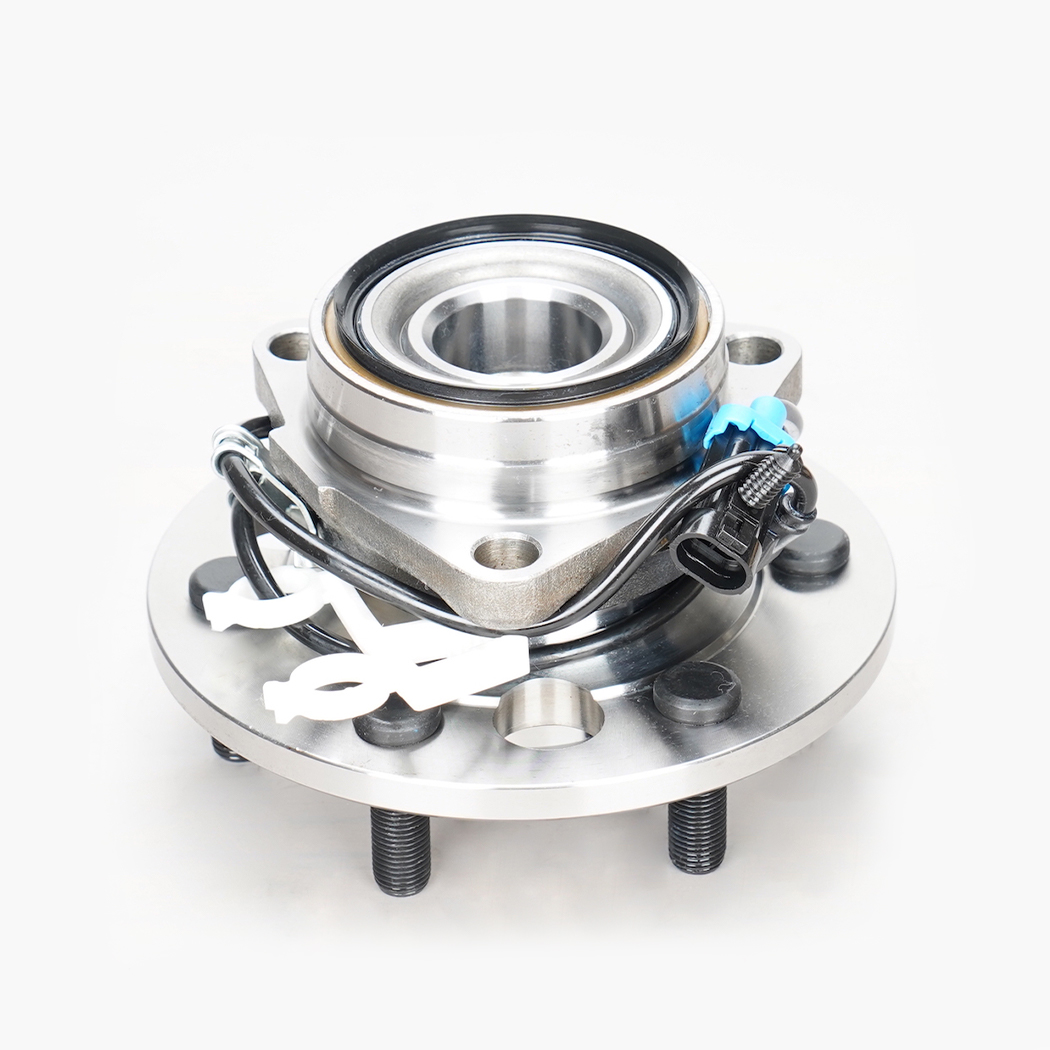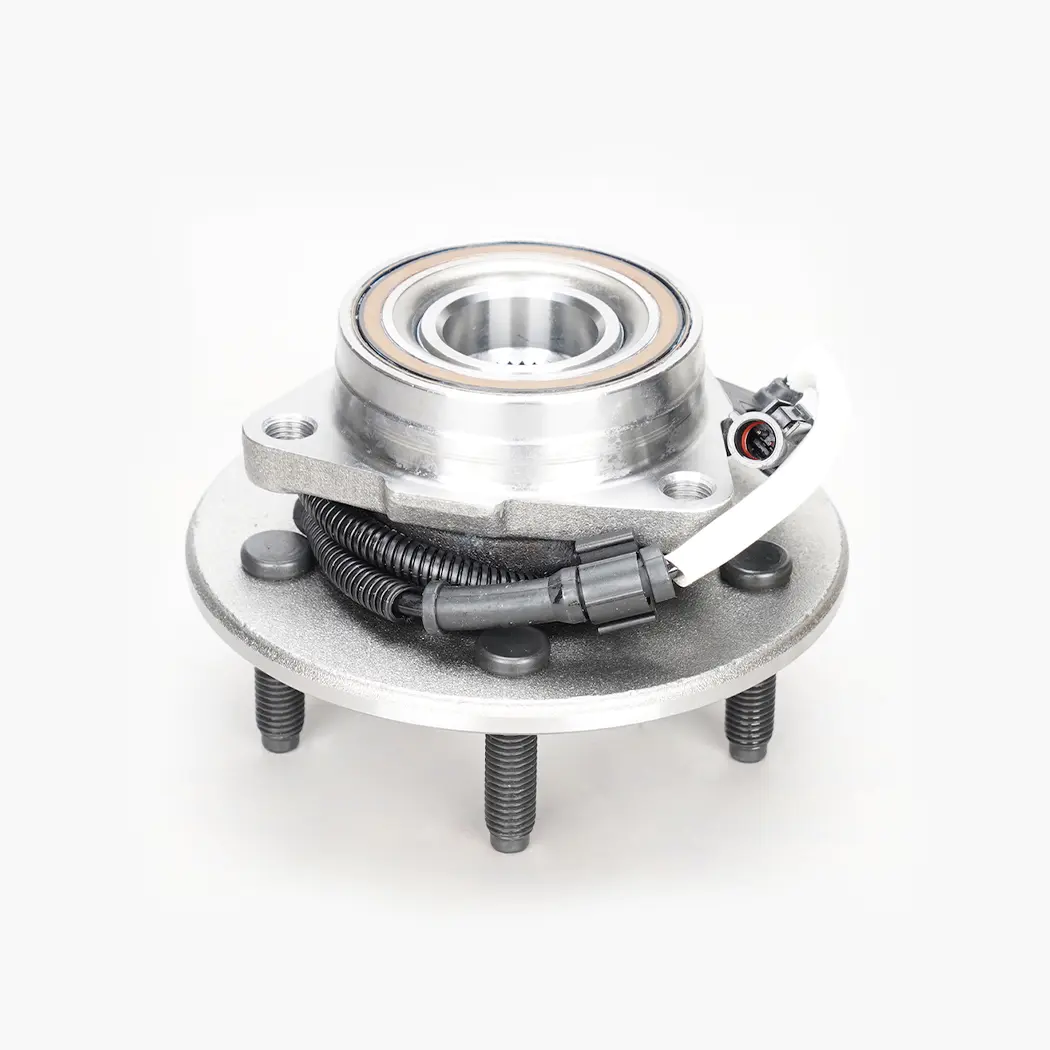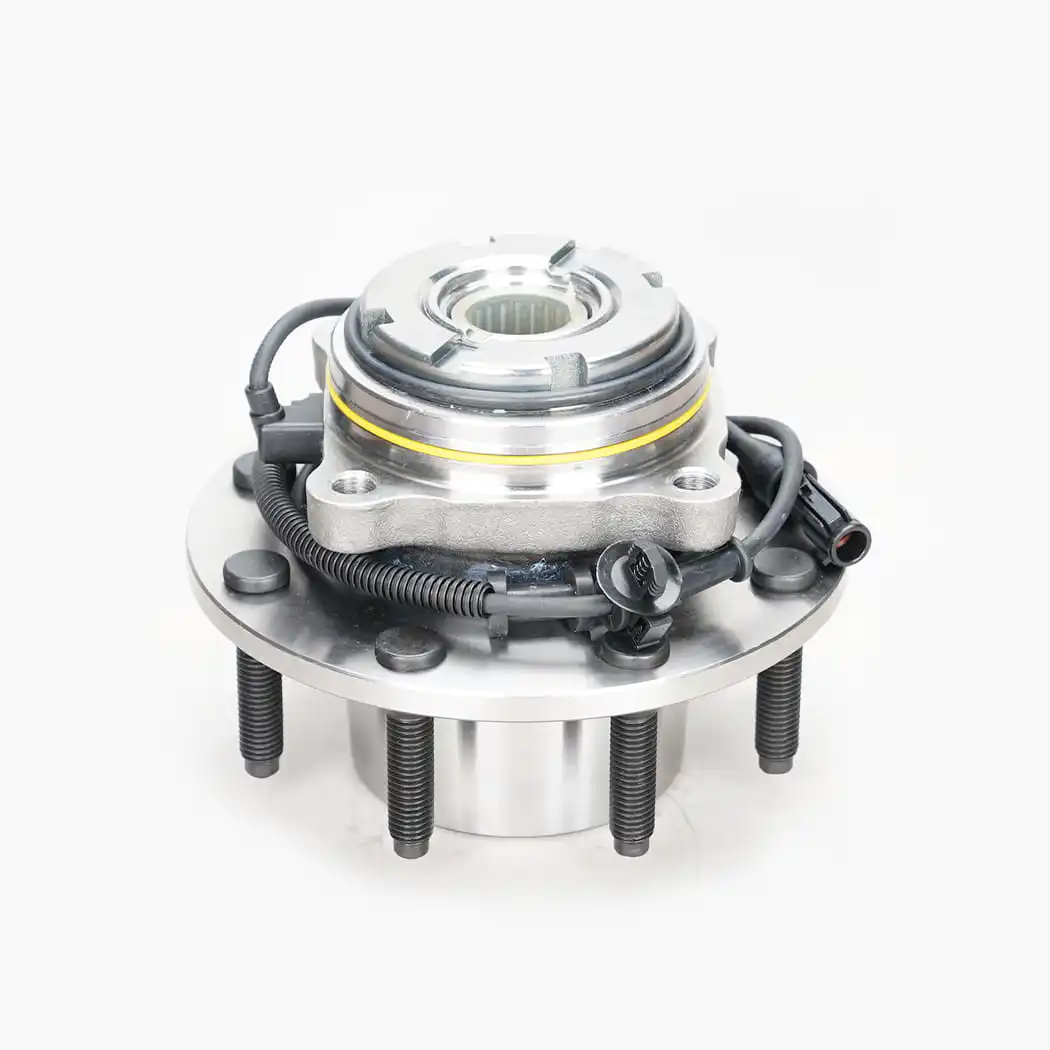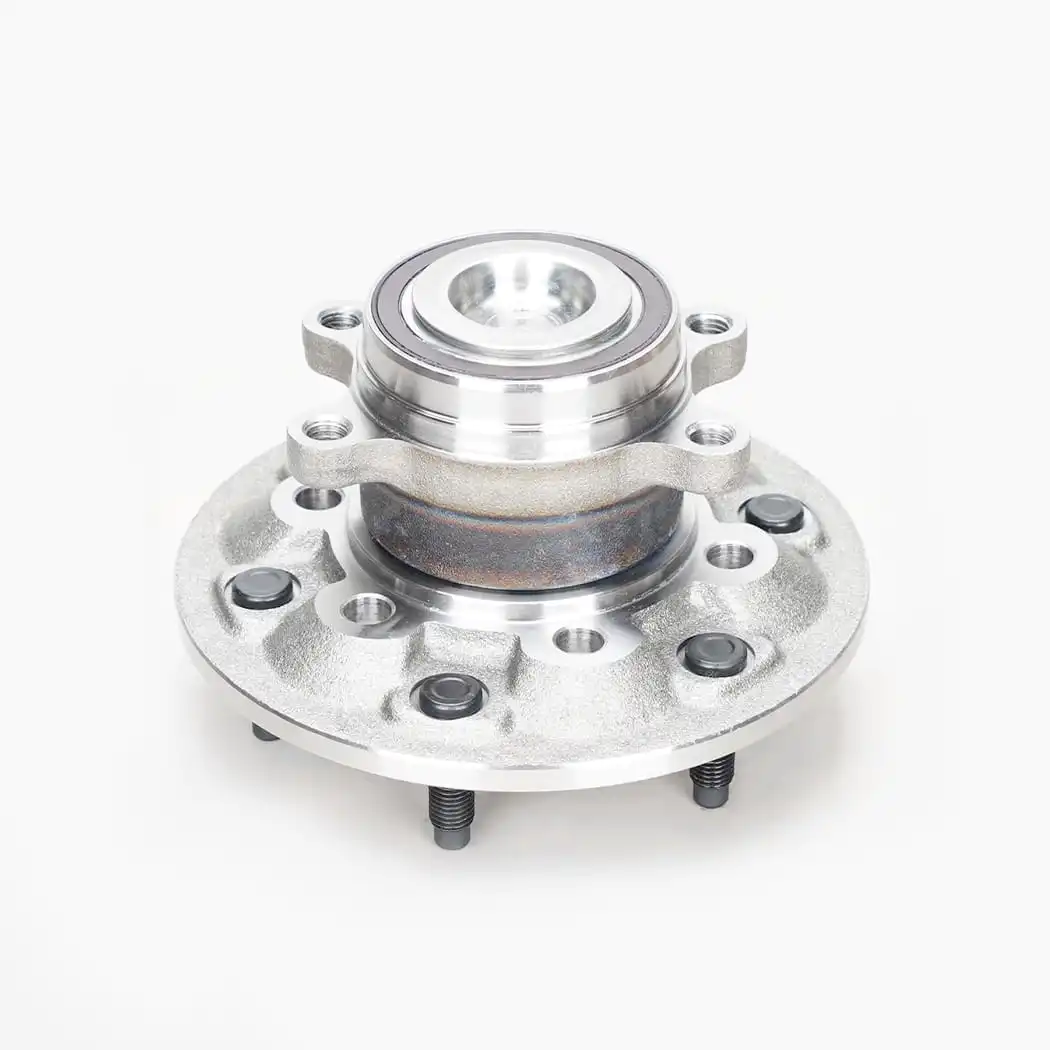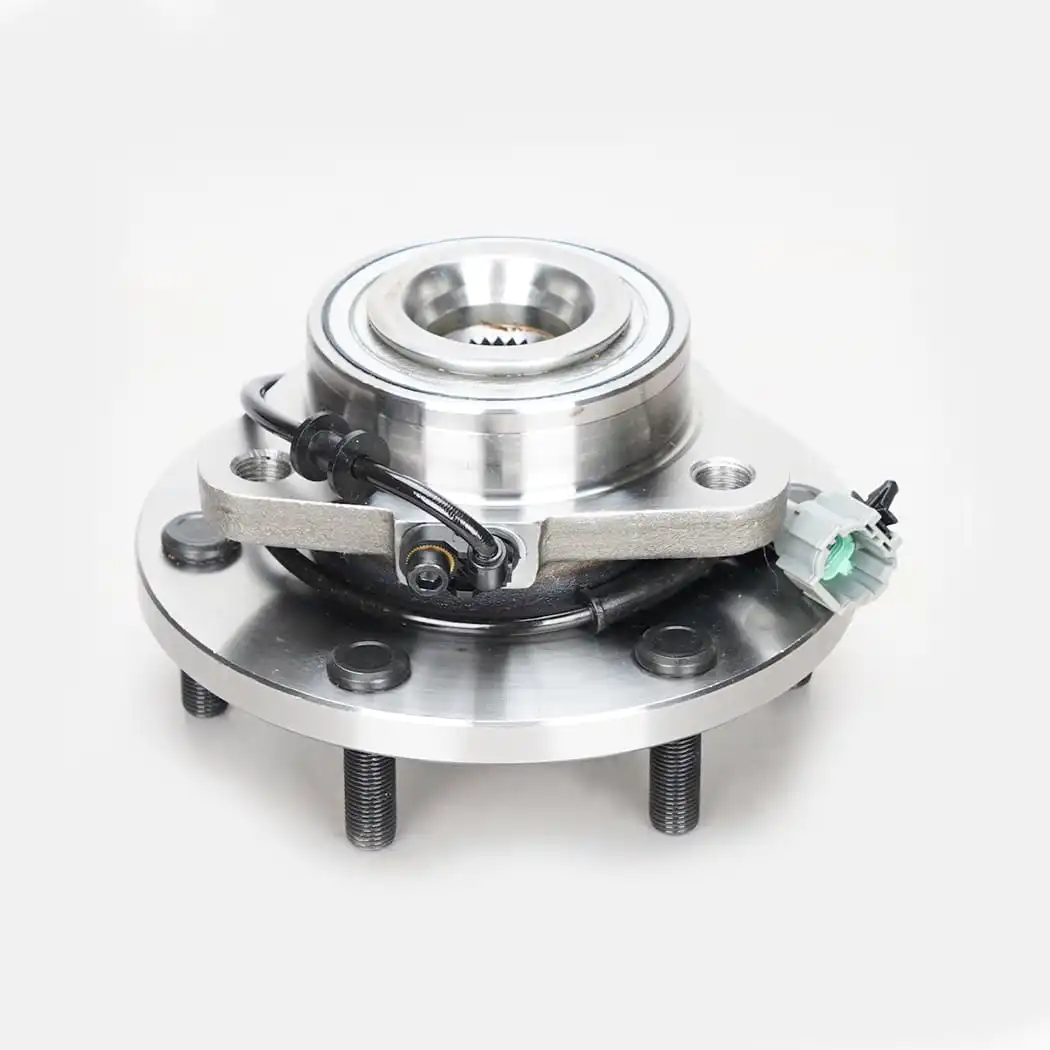
A wheel hub spends its life in one of the least forgiving places on a vehicle. Rain, brake dust, heat from the brakes and, on a winter road, salt water several times a day. That is why so many hub and bearing assemblies leave the factory with a plated finish rather than bare steel. If you have been looking into what an electroplate wheel hub actually is — what the coating contains, how it is applied, and what it really does for the part — this guide walks through it from the point of view of the people who make them.
Content
Strictly speaking, an electroplated wheel hub is a hub assembly whose steel surfaces have been given a metallic coating through electrodeposition. Direct current is passed through an electrolyte bath, the hub works as the cathode, and dissolved metal ions are reduced onto its surface, atom by atom. The result is a thin, tightly bonded metal layer, usually measured in microns, that changes how the steel behaves in service.
Two clarifications are worth making early. This is not paint or powder coat; the coating is metal bonded to metal, which is why it survives the mechanical contact at a wheel mounting face. And not everything that looks plated is electroplated. Electroless nickel is deposited by a chemical reaction with no current at all, while conversion coatings such as zinc phosphate or black oxide change the surface chemistry instead of adding a metal layer. Each approach has its place, and choosing between them is a design decision rather than a question of good or bad.
On bare carbon steel, corrosion starts the moment the part meets moisture. Rust does not just look bad; it lifts material off the surface, roughens the wheel mounting face and can creep under seals. A zinc-based coating protects in two ways at once. It acts as a barrier that keeps water and oxygen away from the steel, and it also sacrifices itself, because zinc is less noble than steel — small scratches and stone chips corrode the coating instead of the exposed metal underneath.
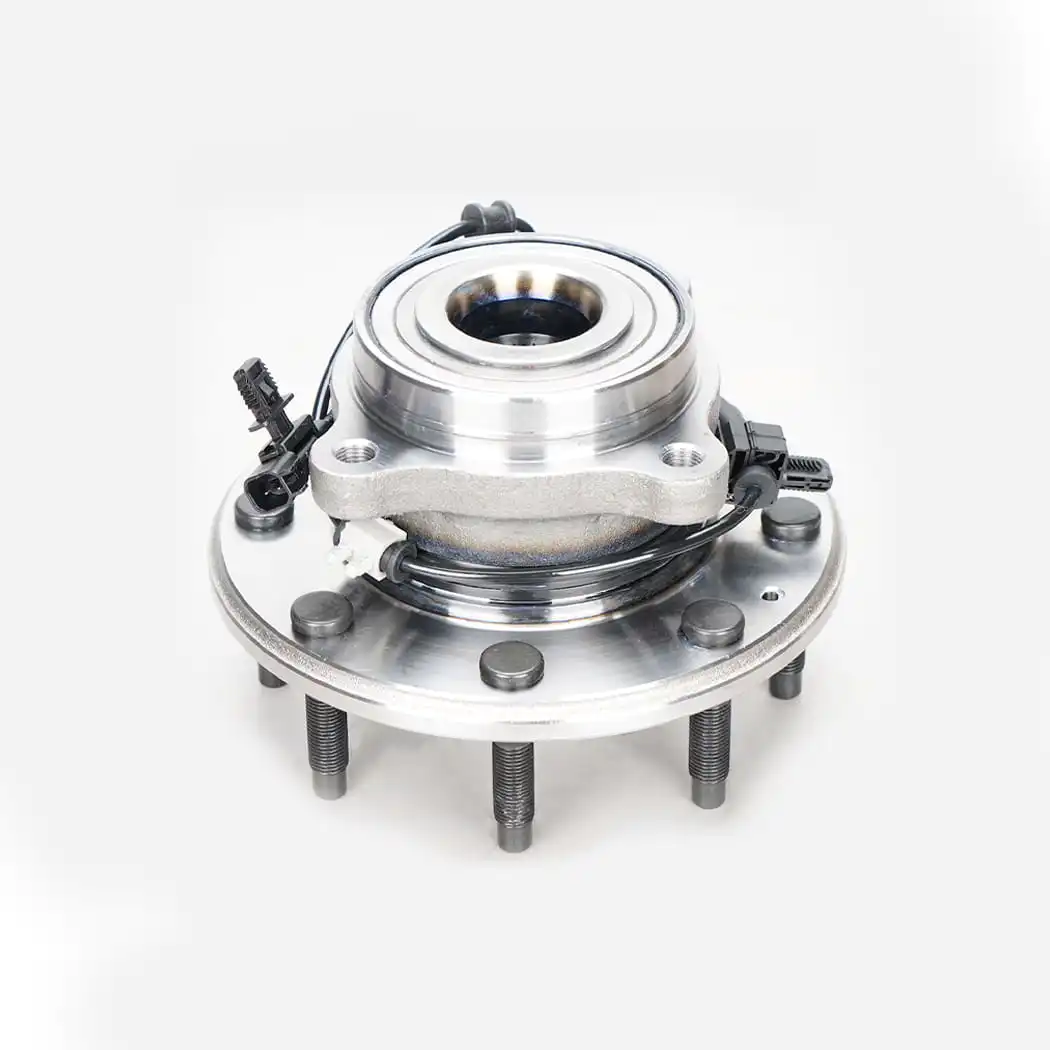
Exposure varies a great deal by position. Front hubs sit close to the brakes and take the brunt of the heat and dust, while rear hubs on crossovers and light trucks often see the worst of winter road salt. A rear hub assembly built for that duty cycle, such as the part we produce for the Honda CR-V, has to hold its finish through several seasons of grit and brine.
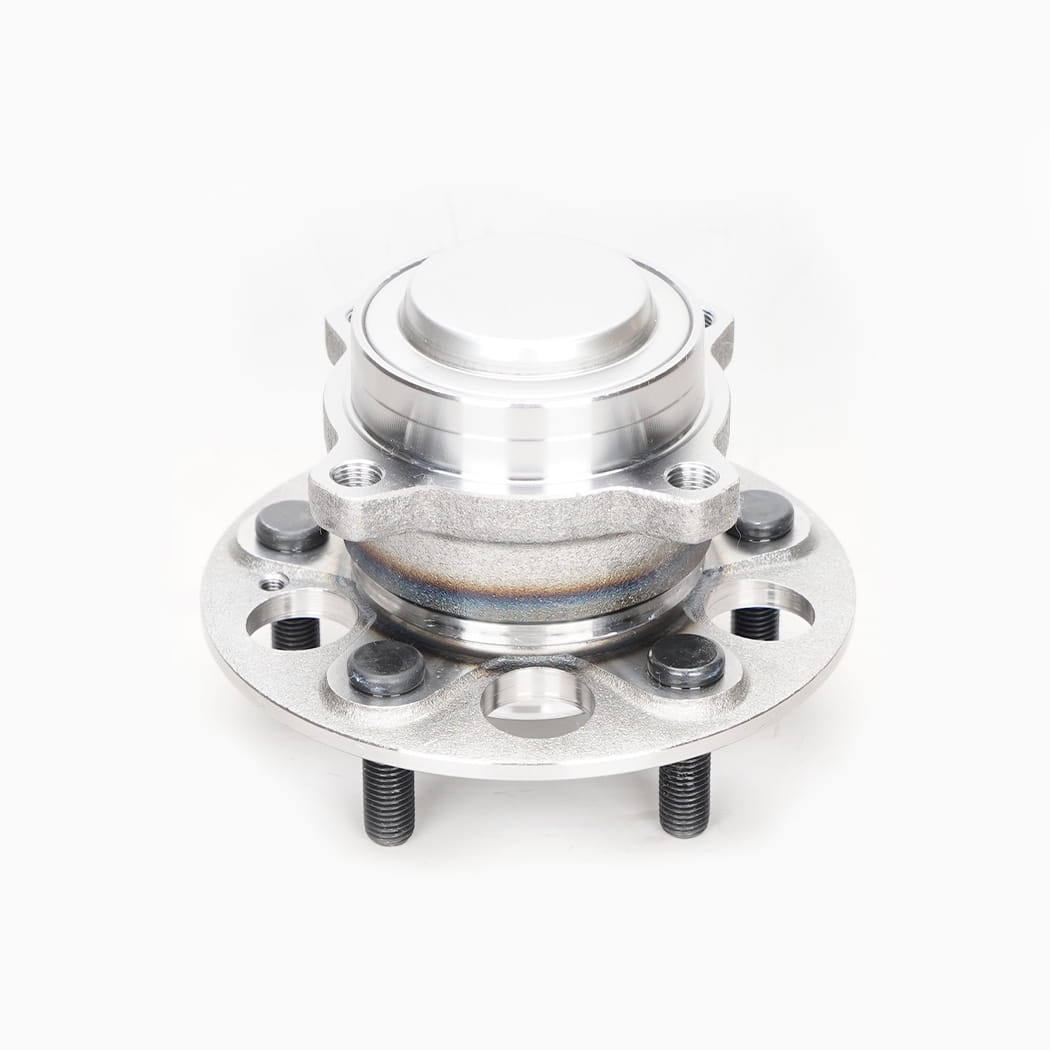 HANHUB 512633 Rear Wheel Hub and Bearing Assembly for Honda CR-VRear 5-lug ABS hub assembly for 2017-2020 CR-V, replacing 42200-TLBA51 and 912737; for rear positions exposed to road salt and grit.View Product →
There is a commercial side to this as well. For a distributor or a driveline shop, a hub that corrodes early becomes a warranty claim and a comeback. A coating that costs a little more per part is often the cheapest insurance in the whole assembly.
Every good plating result is really a cleaning result. The sequence below reflects how a hub actually moves through a surface treatment line.
The table below summarizes the coatings we see most often on hub and bearing assemblies, together with what each one is normally chosen for.
| Coating | Typical thickness | Neutral salt spray (ASTM B117) | Appearance | Typical hub use |
|---|---|---|---|---|
| Alkaline zinc with trivalent chromate | 8 to 12 microns | 96 to 200 hours | Bright silver-blue | General hub flanges and housings |
| Zinc-nickel alloy (12 to 15 percent nickel) | 8 to 15 microns | 720 to 1,000 hours | Matte grey-silver | Heavy-duty pickups and underbody hubs |
| Zinc-iron alloy | 6 to 10 microns | 300 to 500 hours | Dark grey | Hubs that receive paint over the coating |
| Electroless nickel (not electroplated) | 10 to 25 microns | 200 to 500 hours | Uniform satin | Spindles and precision bores |
| Decorative chrome over copper and nickel | 20 to 40 microns total | 200 to 400 hours | Mirror-like blue-white | Show wheels and aftermarket styling |
A coating that protects most of a hub can cause trouble in a few places, and this is where an experienced supplier earns its keep.
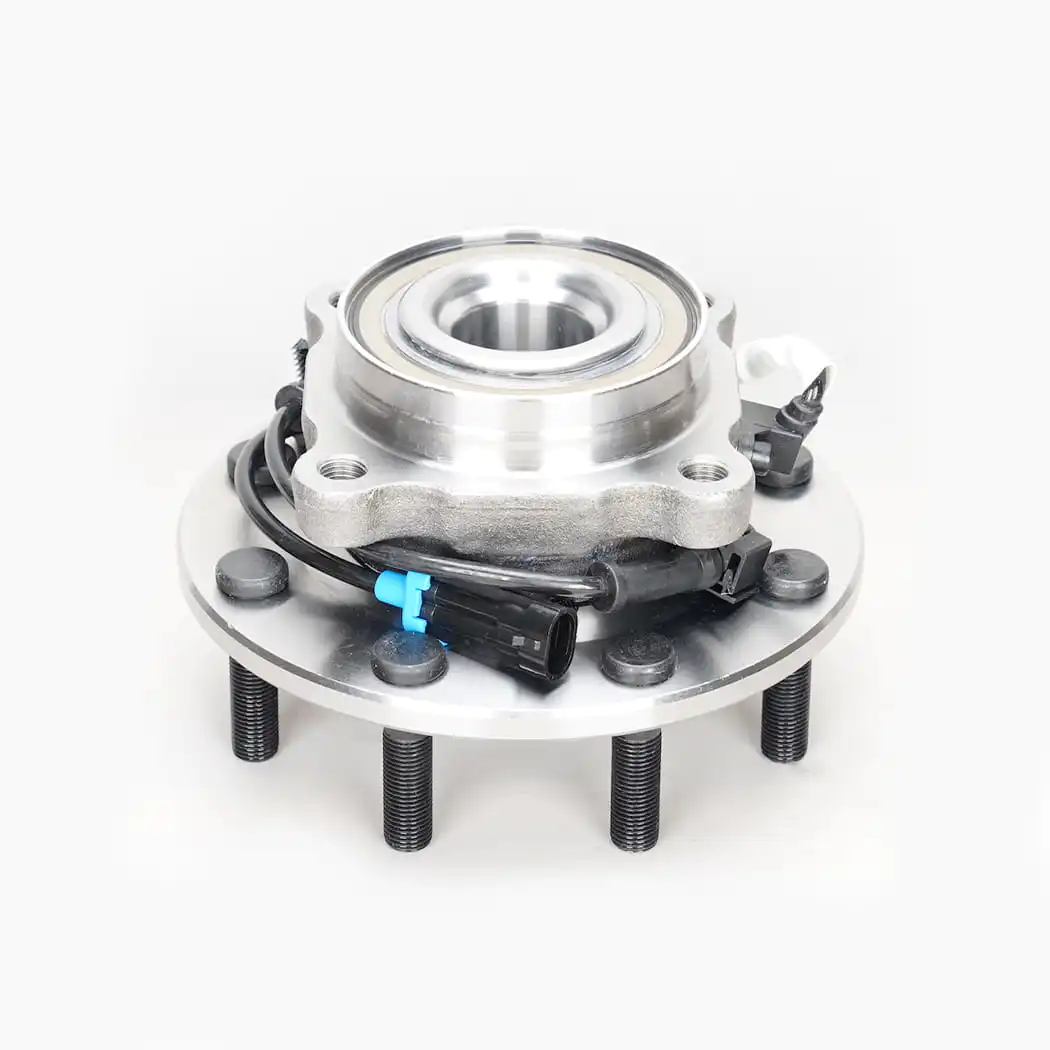
Threads are dimensioned to a tolerance class, and a thick deposit eats into the clearance between a stud and its nut. Plating them too heavily makes a wheel harder to seat and changes the torque-tension relationship, so a specified torque no longer produces the intended clamp load. On a five-lug front hub such as our 515078 for the Ford Explorer and Mercury Mountaineer, studs and threads are handled so that the joint still behaves the way the vehicle maker intended.
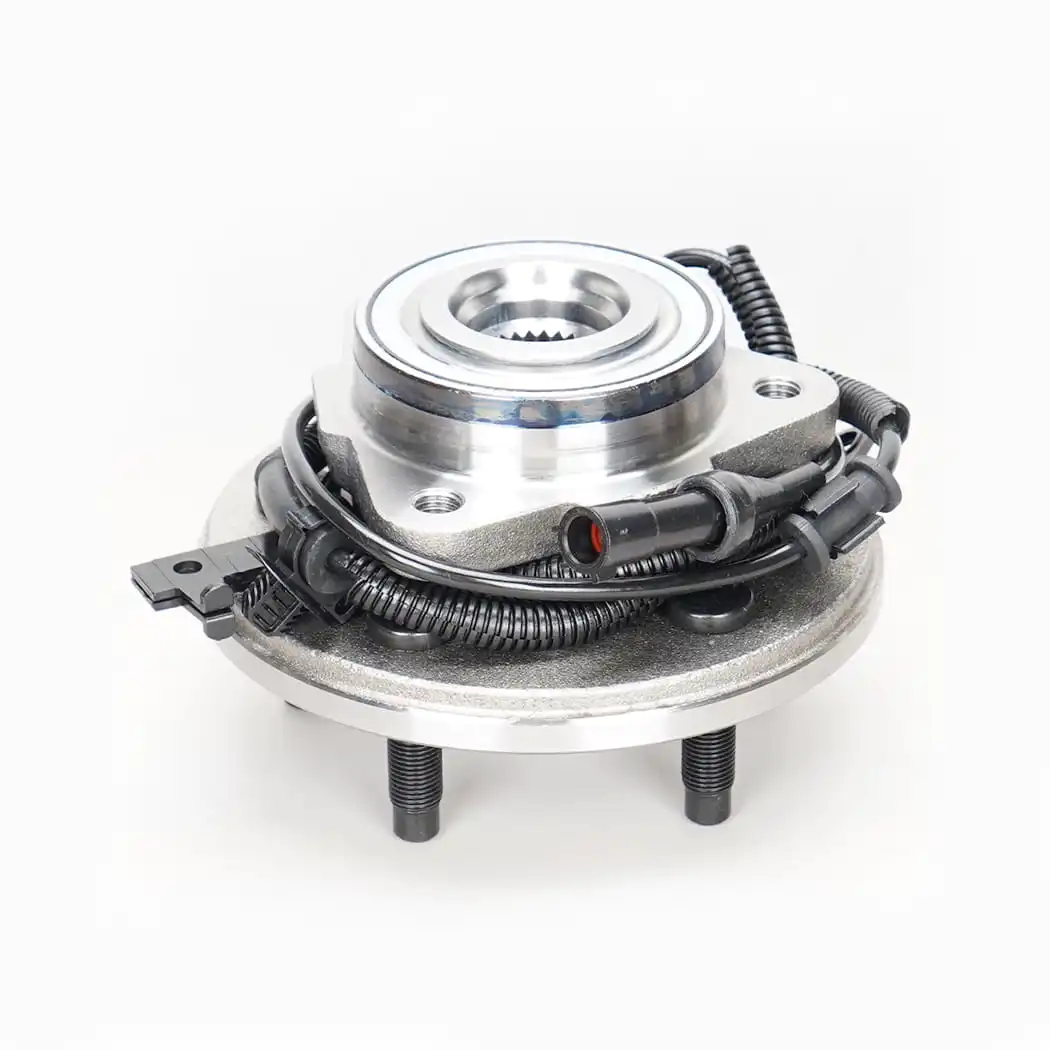 HANHUB 515078 Front Wheel Hub and Bearing Assembly for Ford Explorer and MountaineerFront 5-lug ABS hub assembly for 2006-2010 Explorer, Sport Trac, and Mountaineer; replaces HA590156 and BR930741, with thread and encoder considerations.View Product →
Most modern hub units carry a magnetic encoder ring that the wheel speed sensor reads. That ring must never be plated over, because a metal layer sits in the sensor air gap, distorts the magnetic signal and can set an ABS fault. It has to be masked, fitted after coating, or kept out of the bath altogether.
Deposits of even ten microns change dimensions, which matters on a bearing bore or a spindle journal, so those areas are masked off or machined after plating. The wheel mounting face deserves attention too, because its friction characteristics influence how clamping force develops when a wheel is tightened.
One more point to keep in mind: aluminum wheels and steel hubs are dissimilar metals. Zinc-based coatings are generally kind to that pairing, while a thick decorative chromium layer, which is cathodic, can push corrosion onto the aluminum when water sits between the two surfaces for long enough.
Coating quality is measurable, which means it can be verified rather than assumed. Plated hubs are checked with coating thickness gauges, adhesion tests such as bend and thermal shock, and neutral salt spray exposure in our own test laboratory. Dimensional checks follow the same rule: any feature that plating could change is measured after coating, not before.
We are also careful about where the process runs. Our own manufacturing, printing and plastic production facilities let us control the sequence from surface preparation through packing, which is the only reliable way to keep a finish consistent from one production lot to the next.
From a buyer's side, a few questions cut through most of the marketing:
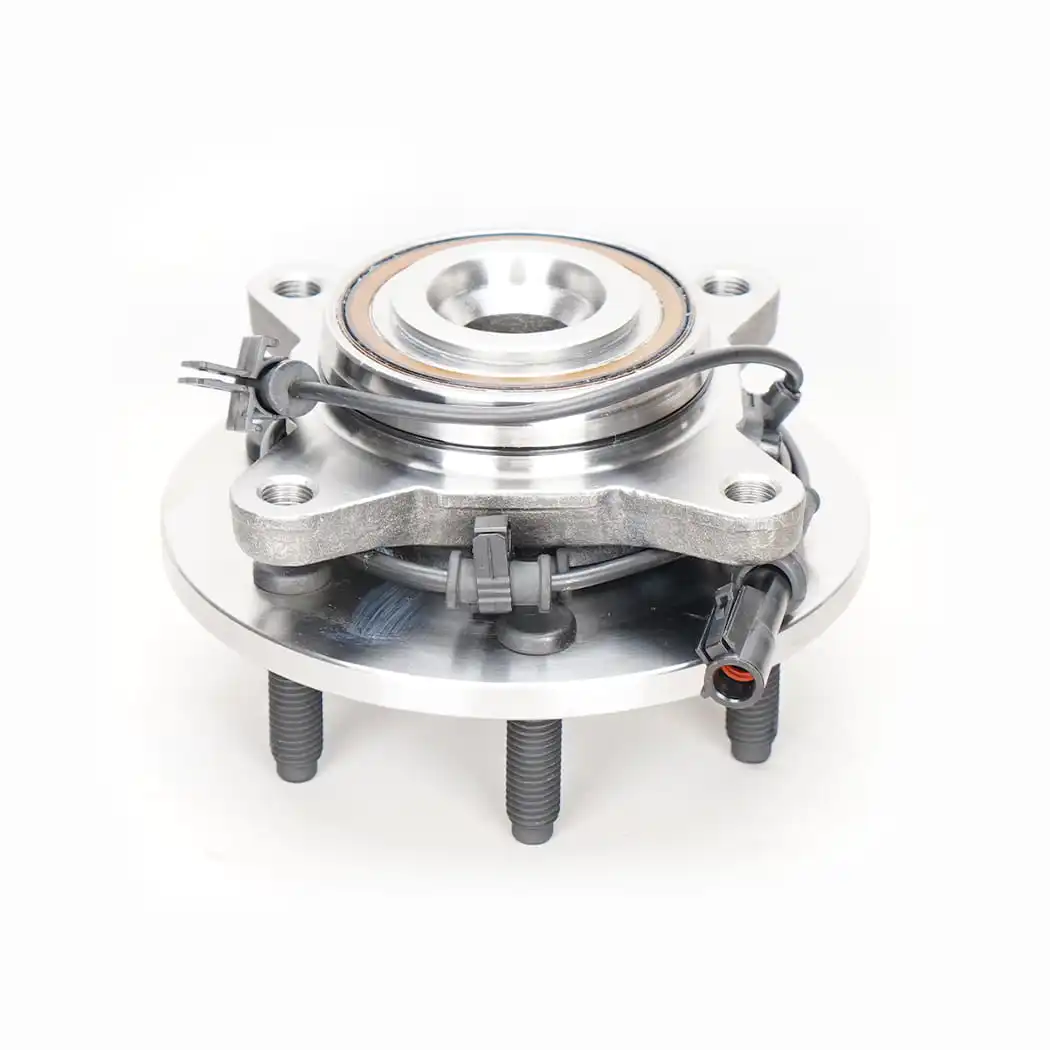
Start with the interchange numbers. A hub sold for a specific application should list the OE numbers it replaces alongside the common aftermarket references, so a shop can cross-check what came off the vehicle. Vehicle type matters too: a half-ton pickup used as a daily driver, a heavy-duty truck living on salted highways and a compact crossover doing short winter trips each put different demands on the finish. The same logic runs across our range, from heavy 8-lug units down to the compact 4-hole front assemblies used on the Lexus GX, 4Runner, FJ Cruiser and Tacoma family.
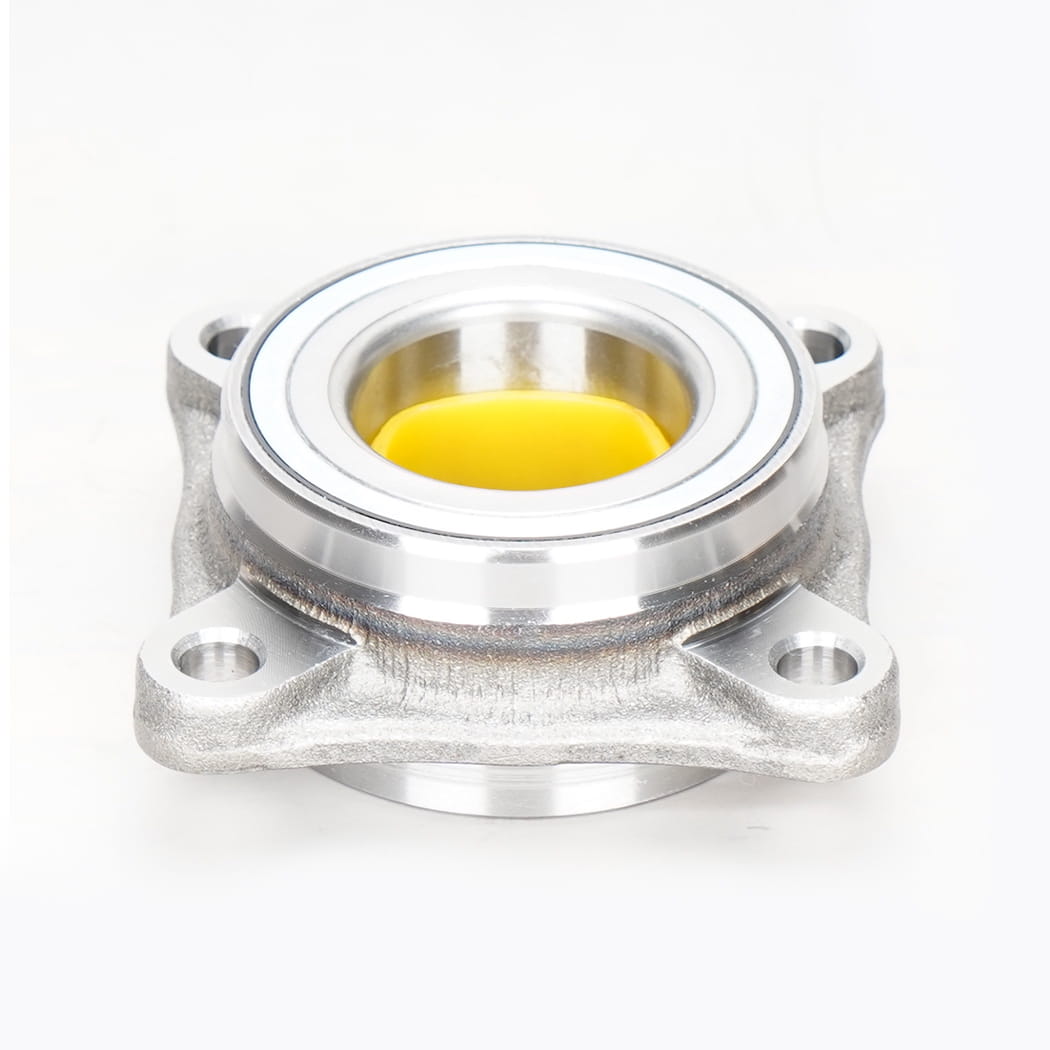 HANHUB 515040 Front Hub Assembly for Lexus GX and Toyota 4Runner4-hole ABS front hub assembly for GX460/GX470, 4Runner, FJ Cruiser, and Tacoma; lists OE and aftermarket replacement numbers for cross-checking.View Product →
Finally, ask how the part is packed. A carefully plated hub shipped loosely against sharp edges will reach the counter looking second-hand, which is a poor advertisement for a good coating.
Even the best finish benefits from common sense. Rinse road salt off when you can, avoid pressure-washing directly into a seal, and pay attention to the early signs of a tired bearing — humming that changes with steering load, roughness felt through the steering wheel, or play at the wheel. Coatings slow corrosion; they cannot reverse wear that has already started inside a bearing.
If you would like to go deeper into the process side, we have written a longer technical note on how wheel hub assemblies are surface treated, and our team is always glad to talk through a specific application.
• ADD: 42705 Grand River Avenue, Suite 201, Novi. Michigan 48375, USA.
© Copyright 2017 HANGZHOU HANJI AUTO PARTS.CO.,LTD. All Rights Reserved. Wheel Hub Unit Manufacturer